Life Rewired Logo

Peace, eggs and the lawn mower rebellion

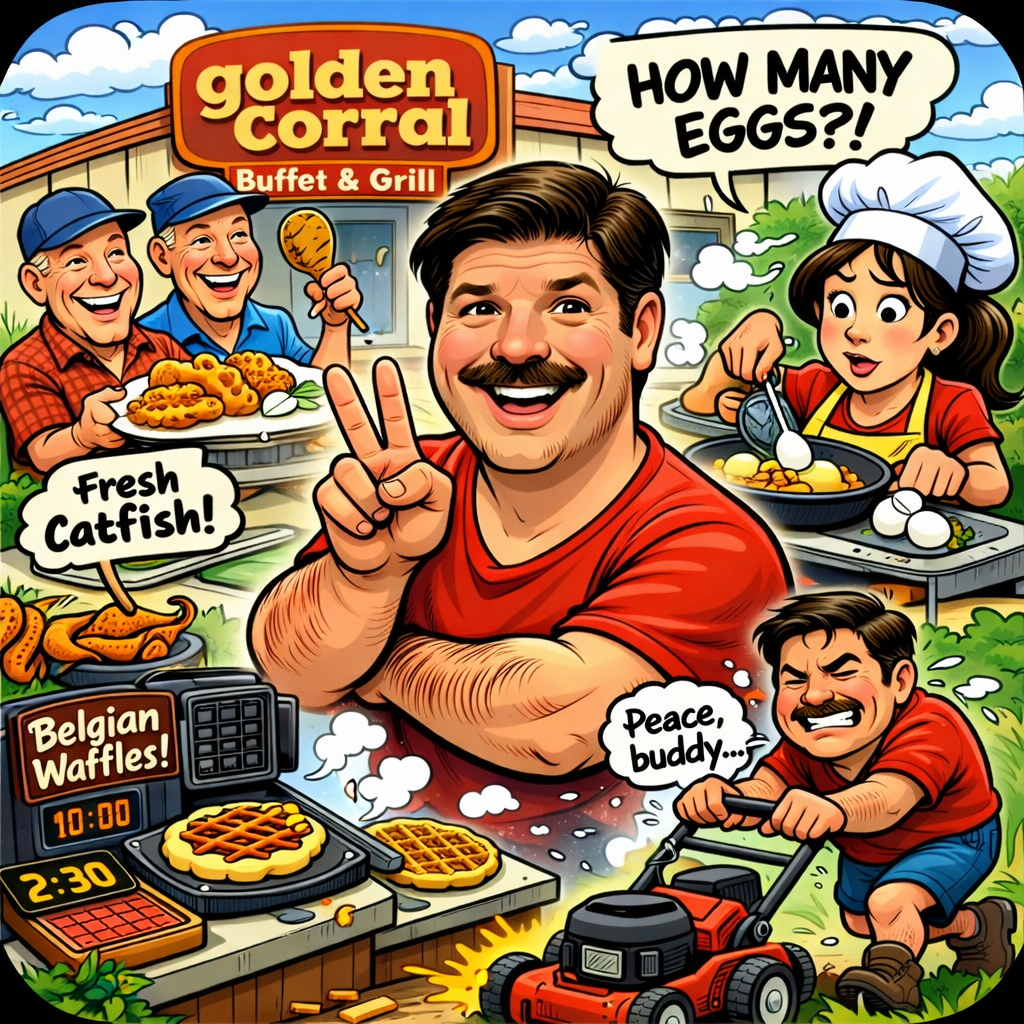
Easter morning started wholesome enough — breakfast with my dad and my uncle at Golden Corral.


Now, I haven’t been to a buffet in ages.


My dad and his brother, however, are basically buffet professionals. These men don’t eat at Golden Corral…

they study it. They go at least four days a week. They know the rhythms. The flow. The ecosystem.


Watching them operate was like observing wildlife experts in their natural habitat.


They paced themselves with Olympic precision.
They knew exactly how to stretch breakfast into lunch.
They timed refills like seasoned stock traders watching the market.


And somehow — somehow — they knew the exact prophetic moment when fried catfish would appear on the buffet.


Meanwhile… I was just trying to survive the omelet station.


I handed the cook bacon and spinach. She placed them in the skillet. I stood there patiently waiting for the… you know… omelet part.


I kept thinking, Any second now the eggs will arrive.


She looked at me and said, “Egg?”


I smiled confidently.
“Yes please.”


Because… how exactly does one make an omelet without eggs?


Then she held up two fingers.


Naturally, I responded with what any reasonable human would say:

“Peace.”


She stared at me like I had grown a decorative horn out of my forehead.

She held up two fingers again.
“Egg?”


“Sure!” I said, doubling down on the confusion.


She shook her head, cracked two eggs into the skillet, and finished the omelet.


That’s when an older gentleman beside me leaned over and said,
“Son… she was asking how many eggs you wanted.”

So somewhere tonight, a woman is telling her family about the idiot who kept offering international symbols of peace instead of answering a simple egg question.


Next came my Belgian waffle adventure.


Fun fact: it takes approximately 10 minutes for me to successfully prepare a waffle that cooks in 2 minutes and 30 seconds.

There were buttons. Rotations. Timers. Steam. Commitment issues. At one point I felt like I needed a certification course.


I’ve decided buffets may not be my spiritual gift. I’m more of a “point at menu item #7 and wait quietly” kind of person.


After consuming what can only be described as a week’s worth of calories before noon, I decided to mow the lawn.


Because nothing says responsible adulthood like panic cardio after a buffet.

Everything was going fine until halfway through when my self-propelled mower decided it had reached emotional exhaustion.


The drive wheels locked up.


Have you ever tried pushing a lawn mower whose wheels refuse to move?

It’s less “yard work” and more “training montage for pushing a disabled tank uphill.”


By the end, I wasn’t mowing grass — I was negotiating with machinery.


At one point I stopped, wiped the sweat from my face, and said:


“Well… this is one Easter I will never forget.”


And then I remembered…


With short-term memory issues, there’s a strong chance this entire adventure disappears from my brain in about a week.

And honestly?

I’m okay with that.


Because somewhere out there is a Golden Corral employee who will never forget the guy who answered every question with:

“Peace.”

Netflix and what was I talking about?

ChatGPT Image Mar 26, 2026, 10_49_07 PM

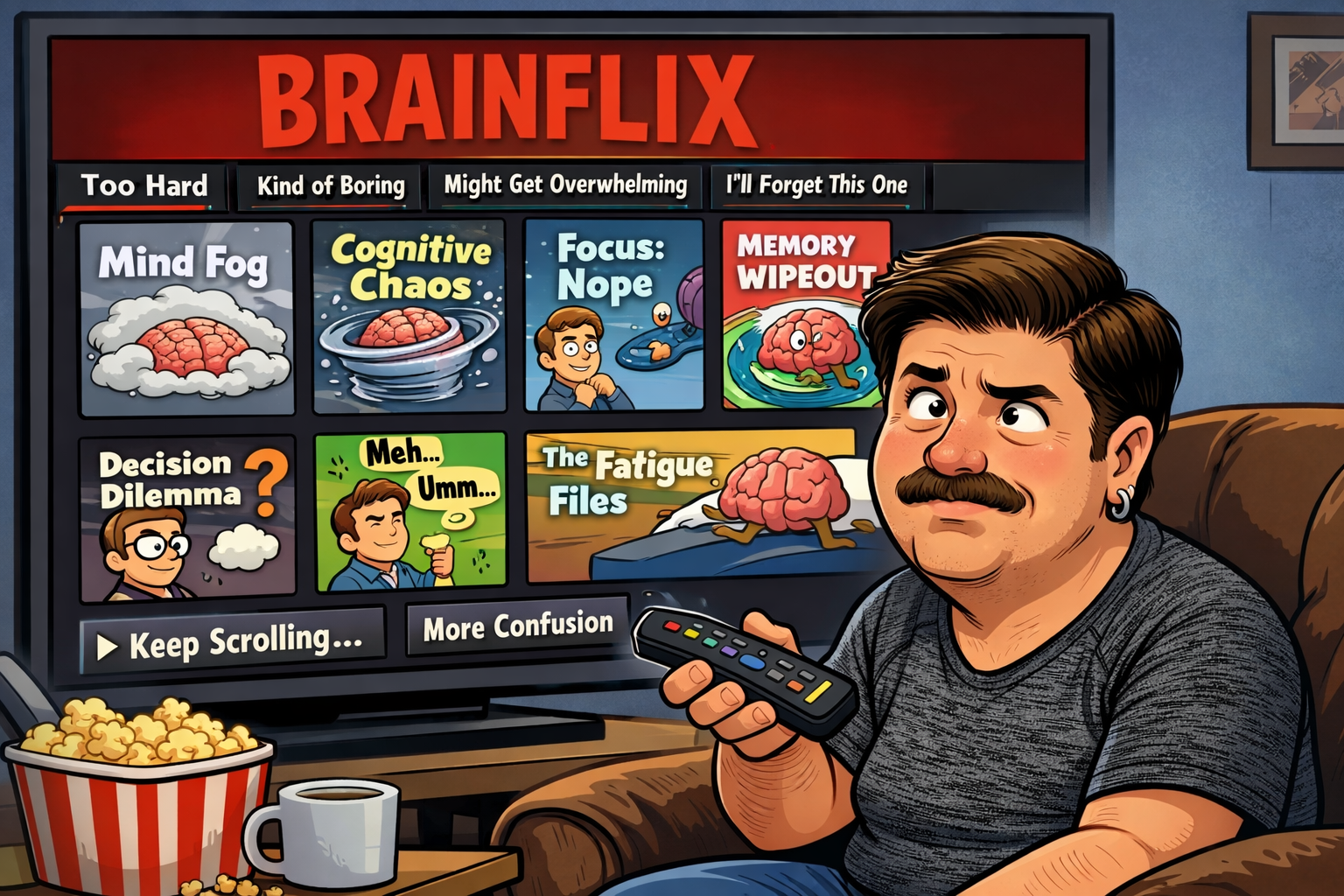
Some days I find myself scrolling through Netflix for 30 minutes instead of actually watching anything. It's funny how we can burn through more time trying to find things to entertain ourselves than to just pick something and go with it.


And honestly… brain injury recovery can feel a lot like that.


Before a brain injury, life felt simple. You didn’t think about every decision. You just picked something and moved forward. Your brain sorted information quietly in the background — filtering noise, organizing thoughts, helping you focus without effort.


After a brain injury, that internal “menu screen” changes.


Suddenly, every option feels loud. Every choice takes energy. Your brain starts scrolling — Should I do this? Can I handle that? Will this overwhelm me? Do I have enough focus today?


What used to be automatic becomes intentional.
What used to be easy becomes exhausting.


People on the outside might see someone sitting still and assume nothing is happening. But inside, the brain is working overtime — processing, evaluating, protecting, adapting. Just like endlessly scrolling through Netflix, you’re not doing nothing. You’re searching for something your brain can actually handle.


And here’s the important part:


Recovery isn’t about finding the perfect show.
It’s about learning when to press play again.


Some days, you won’t pick anything. Your brain needs rest.
Some days, you’ll start something and realize it’s too much — and that’s okay too.
And some days, you’ll finally choose something, settle in, and realize… you’re enjoying life again, even if it looks different than before.


Brain injury recovery teaches patience in a world that rushes decisions. It teaches self-awareness in a culture that praises productivity. It teaches you that progress isn’t always loud — sometimes it looks like simply choosing one thing and giving yourself permission to be there.


So if today feels like scrolling without landing anywhere, give yourself grace.


Because healing isn’t wasted time.


It’s your brain learning how to navigate a brand-new menu — and one day, without even realizing it, you’ll stop scrolling… and start living the story again.

Not all Pizza’s are created equal.

If I tell you I have a pizza, you instantly know what I’m talking about.


You picture it—crust, sauce, cheese.
Simple. Familiar. Universal.


But here’s the thing…

Not all pizzas are the same.


Some are loaded with toppings.
Some are plain.
Some have things you love.
Some have things you’d never choose.


Now imagine this:

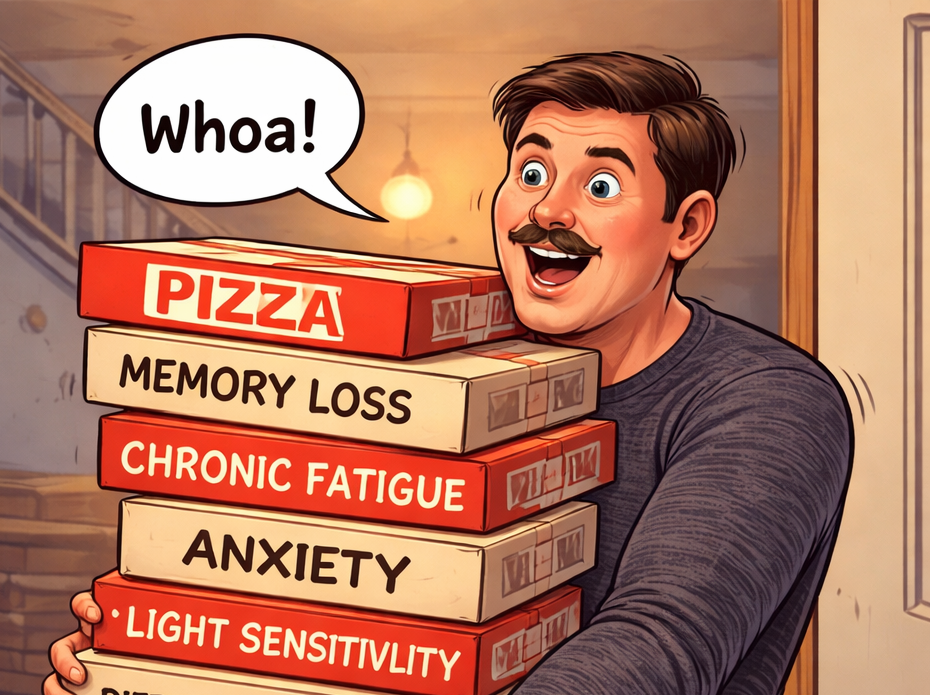
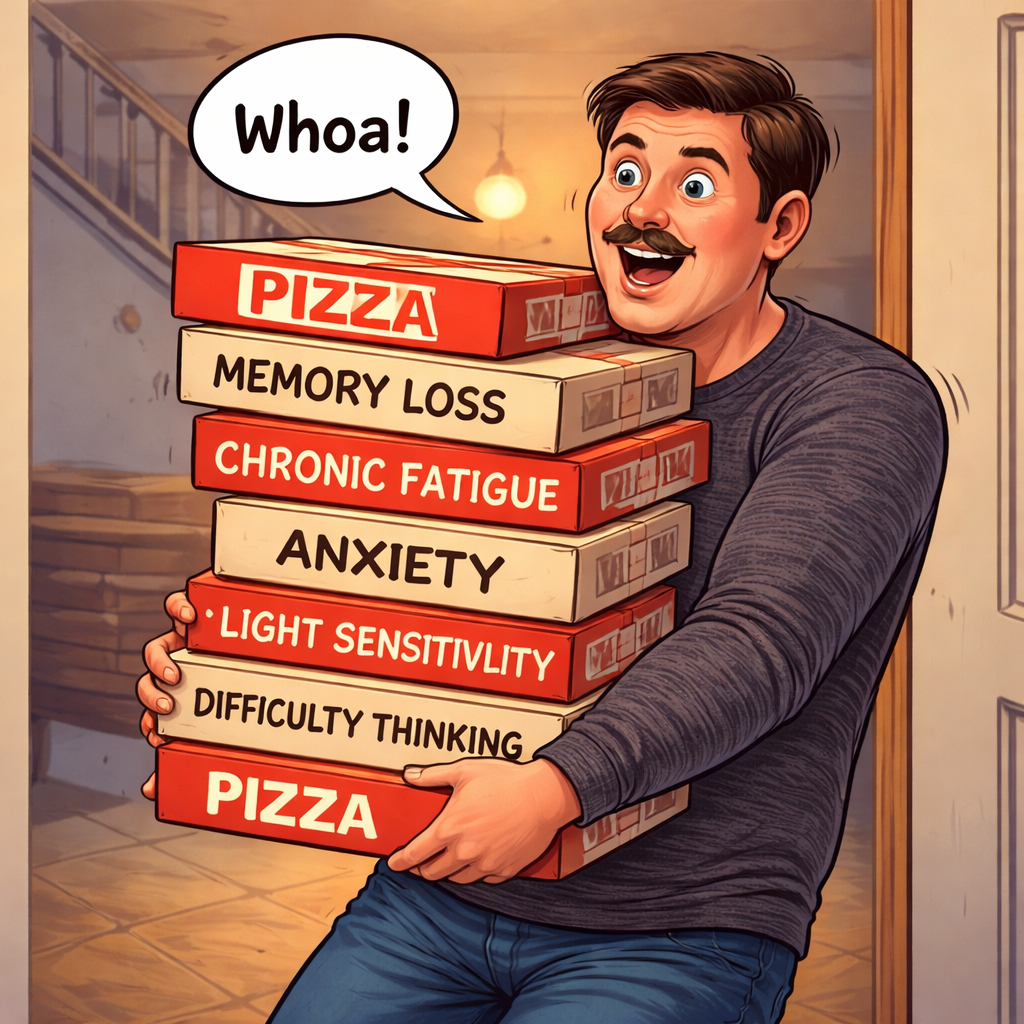
Brain injuries are a lot like pizza.


When someone says, “I have a brain injury,” people think they understand what that means. Just like hearing the word pizza, it creates a general idea.


But what they don’t see… are the toppings.

Because the “toppings” are the symptoms.

For one person, it might be memory loss.
For another, it’s chronic fatigue.
Someone else might be dealing with anxiety, light sensitivity, or difficulty processing conversations.

Some people have a few “toppings.”
Others have so many it’s overwhelming.


And here’s where it really matters:


You can’t judge someone’s pizza by looking at the box.

Two people might both say they have a brain injury…
but what they’re actually dealing with day to day can be completely different.

One might look “fine” on the outside but be fighting a silent battle just to get through a conversation.
Another might struggle physically, but have clarity mentally.


No two are the same.


And just like pizza—what’s manageable for one person might be too much for someone else.

So the next time someone tells you they have a brain injury, don’t assume you know what that means.

Ask.
Listen.
Learn their toppings.

Because understanding doesn’t come from the label…
it comes from seeing the whole picture.

And for those of you living it—

Your pizza might not look like it used to.
It might not be what you would have ordered.


But that doesn’t make it any less real.
And it doesn’t make it any less worthy of understanding.


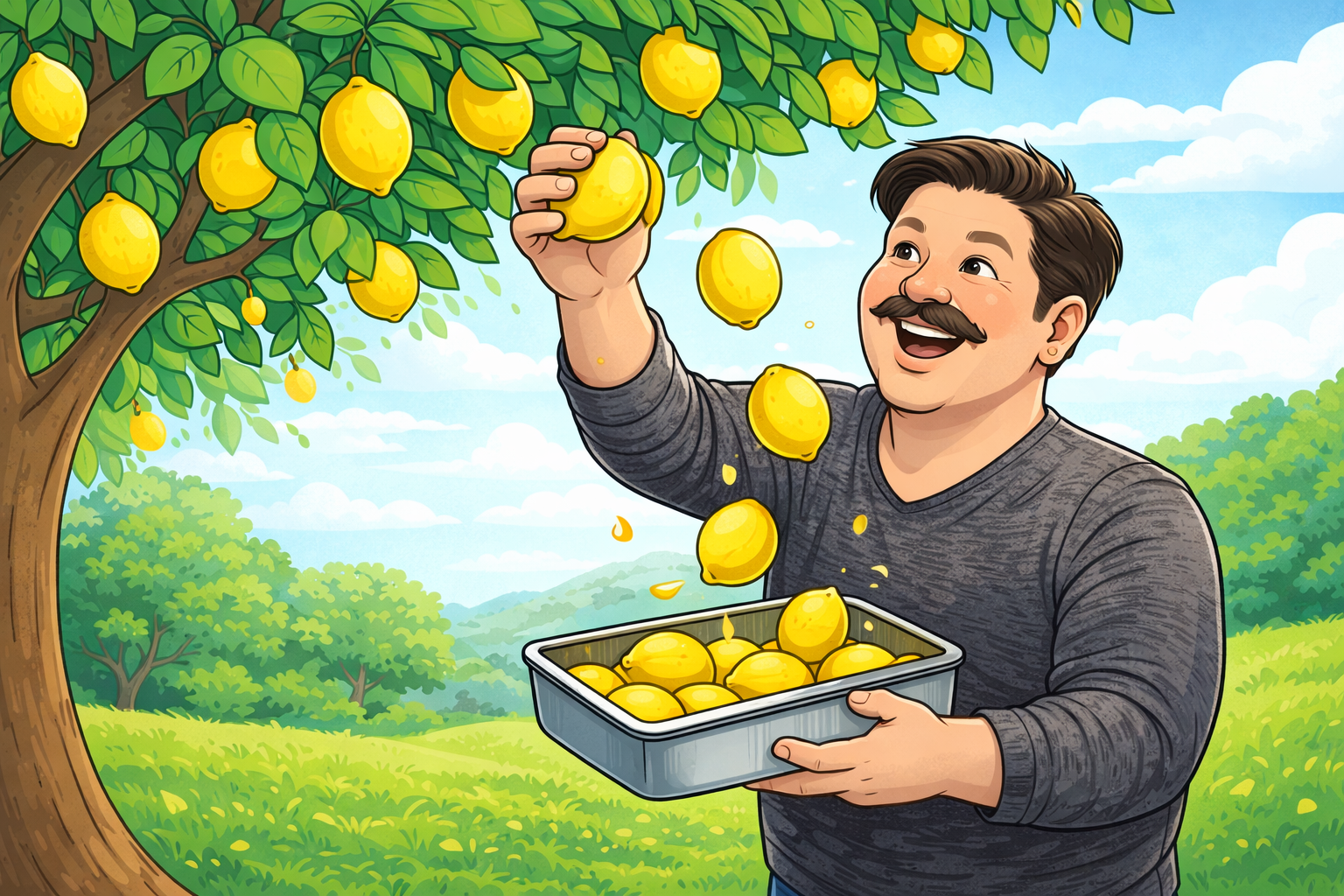
Life Gave Me Lemons But I’d Rather Make Lasagna

If you know me, you know my favorite thing to eat is lasagna.


And yeah… I’ve heard it a thousand times — “When life gives you lemons, make lemonade.” But what if you don’t even like lemonade? What if you’re craving something deeper… something layered… something that actually fills you up?

Lasagnas are made in layers — and sometimes that’s exactly how life feels. Layer after layer. Some messy. Some painful. Some beautiful. You expect everything to go smooth, but then life throws in burnt edges, broken noodles, and sauce spills you didn’t see coming.


But here’s what I’ve learned…

The best lasagna isn’t made from perfect ingredients. It’s made from patience. From time in the heat. From trusting that even the messy layers have a purpose.

My life hasn’t been smooth. It’s been layered. Recovery. Growth. Faith. Setbacks. Comebacks. And every single layer made me stronger.


So maybe life gave you lemons.

But you get to decide what you make with it.


As for me?
I’d rather make lasagna.


When Grief and Grace Share the Same Room

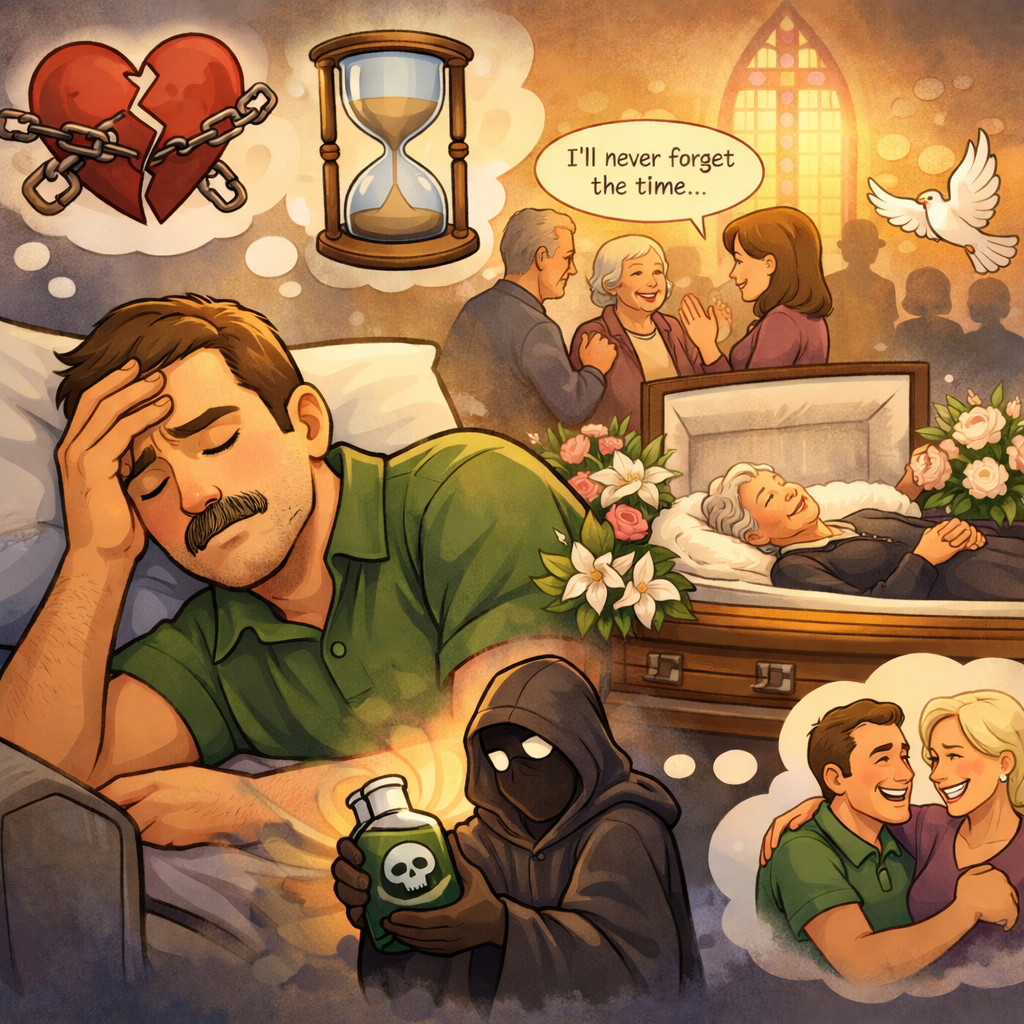
Funerals are strange places. They can be overwhelming and therapeutic all at once. I don’t have research or case studies to back that up—this is simply the world according to Rob—but after the past two days of visitations, I believe it deeply.


Even under the best circumstances, funerals are emotionally exhausting. Add a brain injury to the mix, and what might be difficult for others can quickly become the perfect storm. I had already spent hours mentally preparing myself to see my mother-in-law lying in her casket. That alone sent me into an emotional tailspin. Combine that with barely two and a half hours of sleep the night before, and my body and brain were already waving white flags.


When I arrived, words failed me. Complete sentences felt just out of reach. People who don’t often see me in moments like that were understandably concerned. I did my best to avoid conversations—not because I didn’t care, but because I didn’t want to add one more burden to Sheila by having to explain that this is what cognitive overload looks like for me.


The funeral director was incredibly kind. She gently encouraged me to lie down on the couch, reassuring me that it was absolutely okay. I knew she was right, but I resisted. I worried about how it might look—afraid people would think I didn’t want to be there or that I was being antisocial. It took a lot of convincing, but eventually the pounding headache and sheer pain won the argument. I gave in, and I’m grateful I did.


Despite the overwhelm, something beautiful happened.


I saw people I hadn’t seen in years. Just hearing familiar voices brought a calm sense of security. I watched as love for my mother-in-law filled the room. I overheard story after story that began with, “I’ll never forget the time…”—and I smiled every time, because I knew what was coming next would be something happy, funny, or inspiring.


I won’t pretend she was perfect. None of us are. There were people in her life who held grudges against her. But if we’re honest, a deep enough dive into any life would reveal someone who dislikes us, misunderstands us, or has written us off entirely.


And here is where I found peace.

We cannot control the bitterness others choose to carry. That is not our cross to bear. Holding a grudge is like swallowing poison and waiting for someone else to die—it only harms the one who refuses to let go.


If someone in your life has chosen to write you off, know this: that loss belongs to them, not you.

We may never control how others perceive us, but we always have control over how we respond. Life is short, and when it’s over, there are no do-overs. No rewinds. No “I wish I had said…”


So, love generously—even those who don’t love you back.
Forgive often—even when it’s hard.
And never let a single day pass without telling the people closest to you how deeply they matter.

Because in the end, it’s not perfection that’s remembered.
It’s love.

Learning to sit with Grief

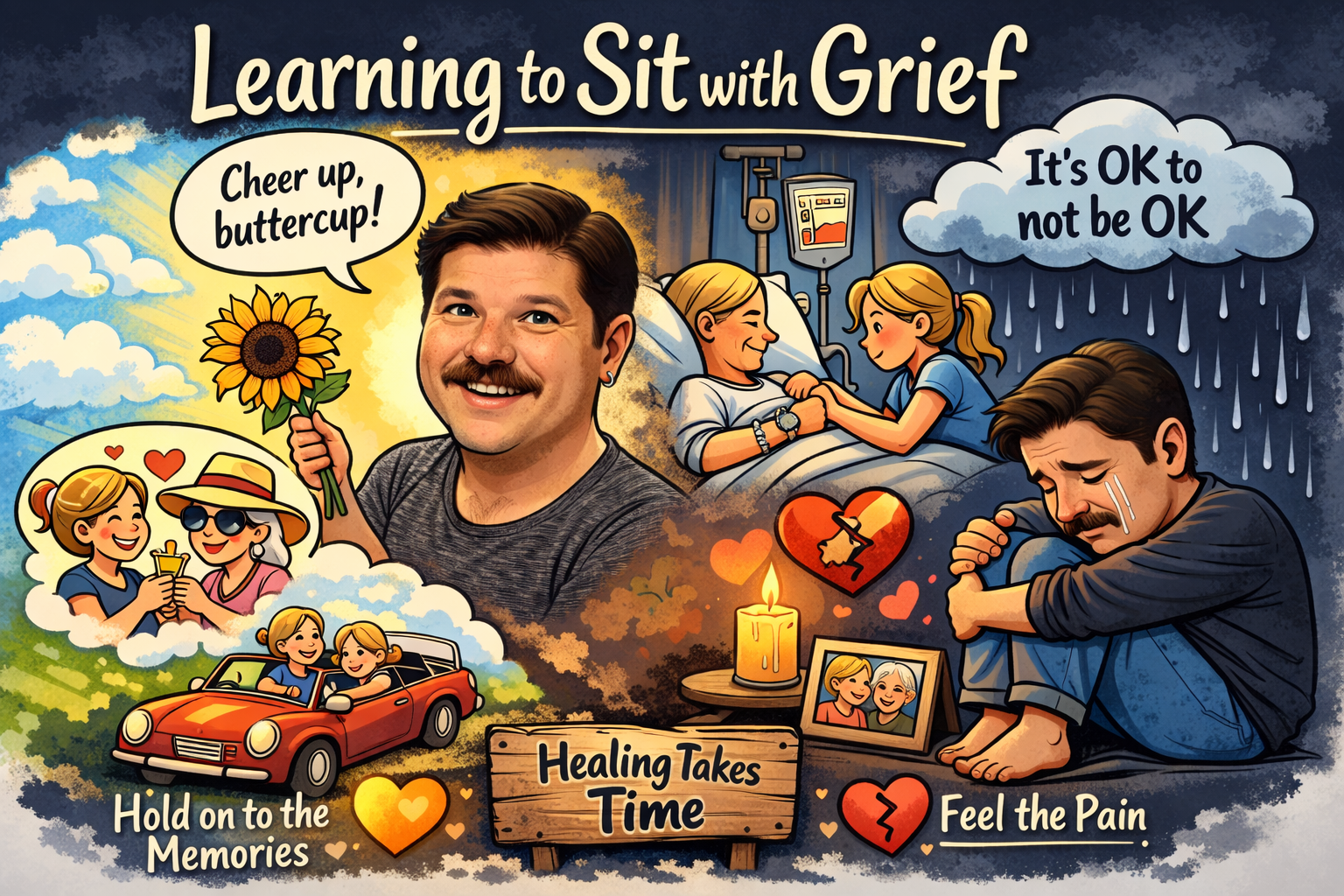
I like to think of myself as a positive person — hopefully not the kind who spills toxic positivity into every room, but the kind who genuinely loves people and wants the best for them. If I see a sad face, my first instinct is to lift it. To remind someone they are still alive, still breathing, still here. I want to say, “Cheer up, buttercup. I love you. Let’s find something that makes you smile.”


But today, as I sit here writing, I am fighting grief — the kind of grief that makes you want the whole world to be quiet. The kind that doesn’t want a pep talk. The kind that needs stillness.


I’m sure you’ve been there. And maybe you’ve had someone like me standing nearby, trying to hand you sunshine when what you really needed was space to sit in the rain.


I realized something today: I have to learn how to sit quietly in the moment. I have to let myself feel what I feel — even when it hurts. If I keep burying pain deep within my soul, how will I ever truly heal? Sometimes it’s okay to not be okay. Sometimes you have to close the door, turn down the noise, and simply breathe. To allow the ache to exist without trying to fix it.


My mother-in-law was a very special woman. She was the Thelma to my Louise — my partner in laughter, in mischief, in life’s little adventures. Loving someone with a heart the size of Texas means losing them will never be easy. Yes, she had flaws. We all do. But our flaws are what make us beautifully human, uniquely ourselves.


Her last day on this earth was filled with a level of pain I had never witnessed before. Watching her suffer tore my heart to shreds. I would have traded places with her in a second if I could have. Feeling that helpless — that is a kind of sorrow that lingers.

There is one strange mercy in living with a brain injury and memory loss. In a few weeks, I will not remember the details of what she endured. I won’t remember standing there, wishing I could take her pain away. That part will fade.


And maybe that is grace.


Because what will remain are the good memories — the laughter, the healthy days, the moments when her light filled the room. I am deeply thankful that my long-term memory is strong. Those memories are mine to keep. They are stitched into my heart. They cannot be taken from me.


So today, I am learning something new. I am learning that positivity does not mean ignoring pain. It means honoring it. It means allowing grief to have its moment — trusting that healing will come, just like it always does.


Sometimes we lift others.
Sometimes we sit quietly beside them.
And sometimes, we have to learn to do that for ourselves.


My Mother in law gained her wings.

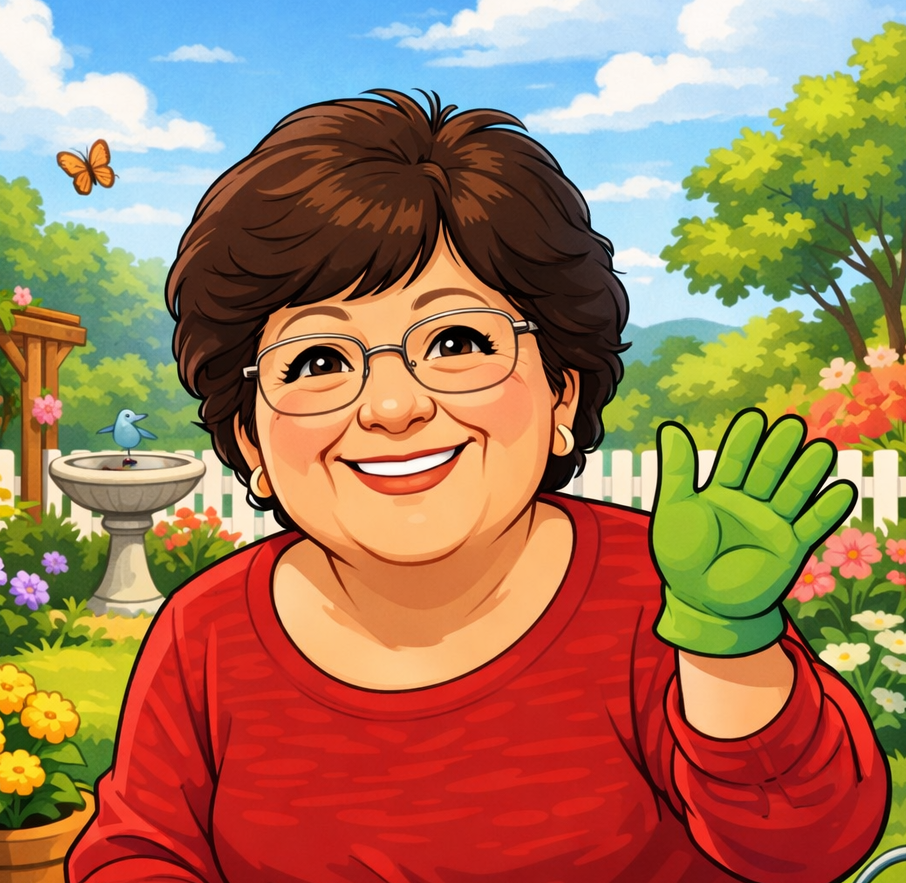
My mother-in-law, Adah, was the most remarkable woman. I will never forget the first time I met her. She greeted me as though she hadn’t seen me in years, arms open and heart wide. That was simply who she was—and who both of my wife’s parents were. They never met a stranger, and there was nothing they wouldn’t do for the people they loved.

Many people say, “Call me anytime, day or night,” but you often wonder how much you can really rely on that. With Adah and Les, there was never any doubt. Their word was as solid as the ground beneath your feet—you could take that promise straight to the bank.

I remember when Sheila and I were newly engaged and I was living on my own. I had a medical issue and truly needed someone to be with me. I never even had to ask Adah. She simply told Sheila that I needed someone watching over me, and she stayed the night in the spare bedroom in case I needed anything. That was Adah—always stepping in, always caring, without hesitation.

There was never a moment when I questioned where I stood with her. She told me every day that she loved me and that I was the best son she could ask for. Years ago, I told her she needed to drop the “in-law” part of “son,” because she was a mother to me in every sense of the word. And I can honestly say she was a mother figure to all of Sheila’s friends as well.

One of my favorite memories is the “trouble” we used to get into—though not really trouble at all. When Sheila and I were engaged, I worked nights, and many times Adah did too. We would sneak off to Waffle House at midnight or later, sitting over breakfast and talking for hours. Mostly, I listened, because Adah always had something to say—and it was always worth hearing.

On my days off, we’d find ourselves at fabric stores or shopping for clothes. How many guys choose to spend their free time hanging out with their mother-in-law? The ones who truly think the world of her.

Adah was my biggest cheerleader. Her love was unconditional. I would do yardwork for her when she wasn’t able, which always ended with me trying to sneak away before she could hand me money I didn’t want. Without fail, she’d meet me at the car and say, “Take this.” I’d refuse, and she’d say, “Take it while I’ve got it.” A few times I gave in—but most of the time, I’d “accidentally” slip it back into her purse when she wasn’t looking. I never did what I did for money. I did it because I loved her to the moon and back.

She was truly one of a kind, and there will never be another like her. I had the privilege of knowing her for 11,022 days of her life—and even that doesn’t come close to being enough.


Go rest high, Adah. Make the heavens shine, dear angel. 💛


I’ll have the number 4 with a side order of brain injury

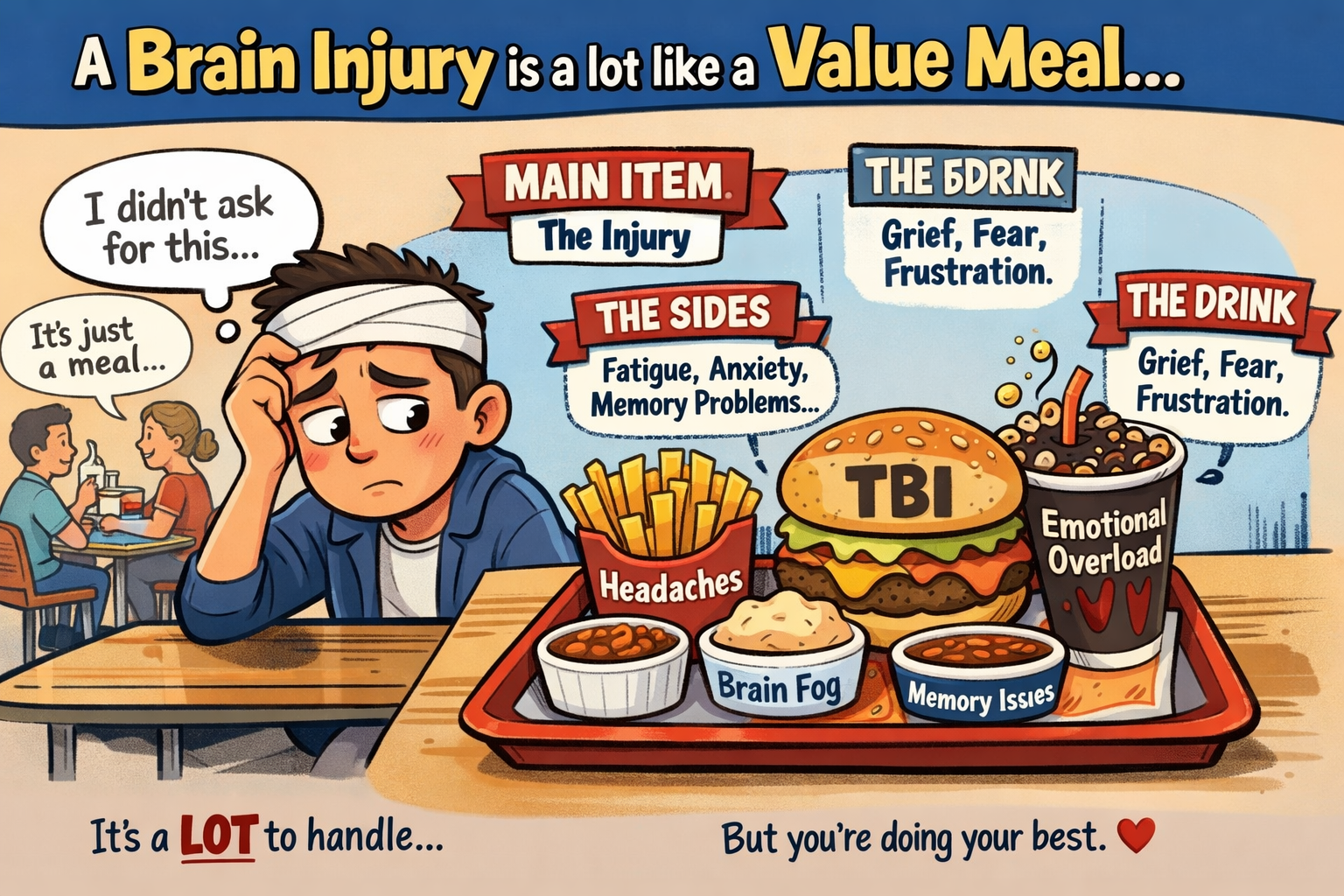
A brain injury is a lot like ordering a value meal.


You have an accident — something sudden, something you never saw coming — and in an instant, this is what you’re handed.

From the outside, it looks simple.

One event. One injury.


But just like a value meal, it’s never just the main item.

There’s the brain injury itself — the part people can name.


Then come the sides no one warned you about: constant fatigue, headaches, memory problems, sensory overload, anxiety, mood changes.


And the drink? That’s the emotional weight — grief for the life you had, fear about the future, and the exhaustion of trying to explain what no one can see.


Everyone else looks at your tray and thinks it’s manageable.
They assume you should be able to finish it like they would.

But they’re not the ones carrying it every day.

Some days you can handle what’s in front of you.
Other days, it’s simply too much — and that isn’t failure, it’s reality.

Over time, you learn how to live with what you’ve been given.
You take smaller bites.
You go at your own pace.
You stop apologizing for needing breaks.

You didn’t ask for this meal.
But you’re still here, adapting, surviving, and showing strength most people will never see.


And that strength?


That’s something no accident can take away.


Is it just me?

Maybe this is what getting older looks like—measuring today against memories from thirty years ago and wondering when the shift happened. Or maybe it’s just that life has slowed me down enough to notice things I once rushed past.


I don’t get out of the house very often anymore. Constant headaches, anxiety, and crowded places have a way of shrinking your world. So when I do step outside my carefully managed bubble, I tend to observe more than participate. Lately, what I’ve noticed hasn’t always been encouraging.


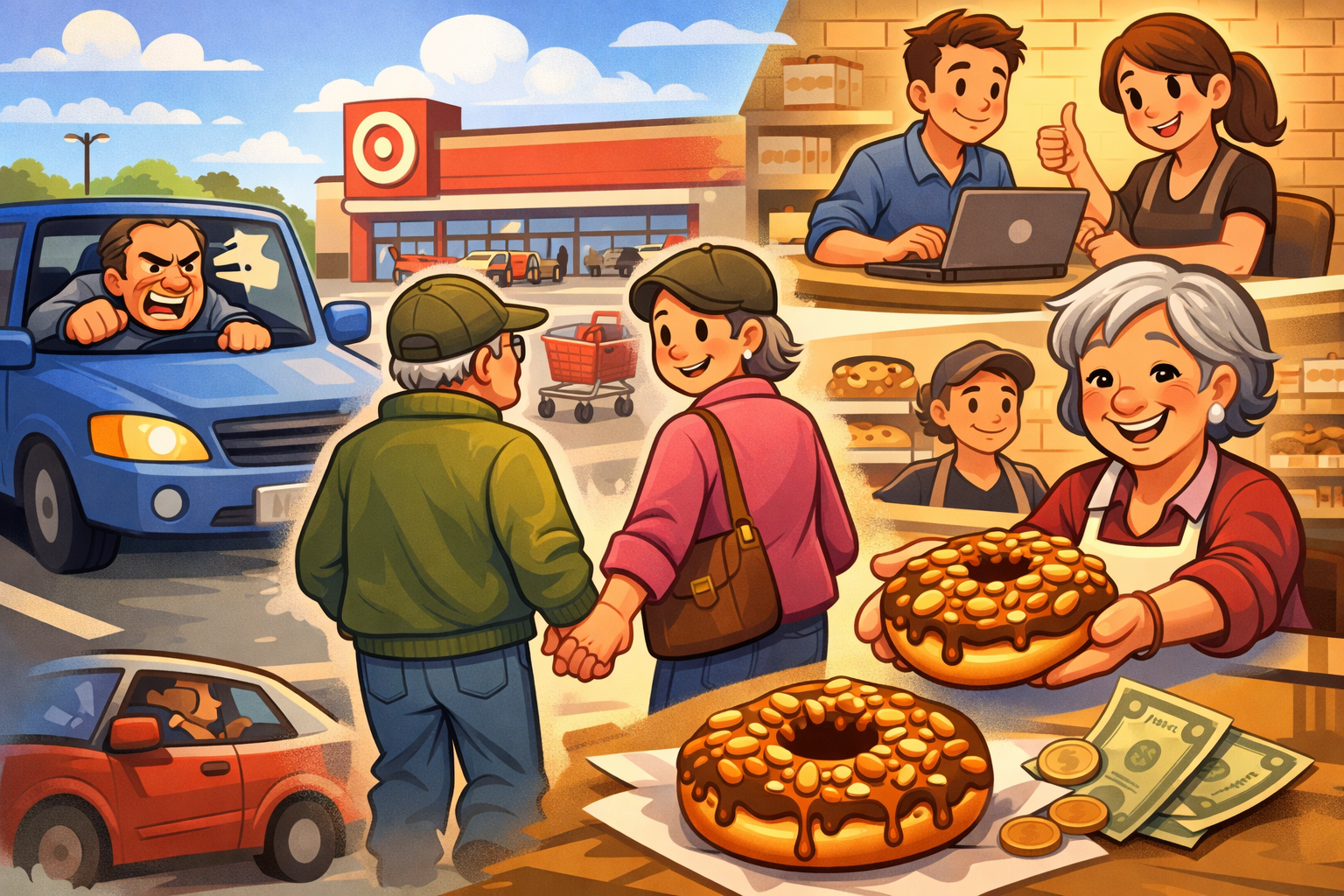
There seems to be a growing impatience in the air—especially among people my age and older. A sense of entitlement. A short fuse. Just today, my wife and I were walking to our car after leaving Target. A man parked next to us was backing out and had to wait—maybe three seconds—for us to clear the way. Three seconds was apparently too much. The frustration on his face bordered on a tantrum.


I turned to my wife and said something that surprised even me: Have you noticed that younger people seem to have more patience and respect than their elders? I’ve seen it in public places. I’ve seen it in the workplace. Not across the board, of course—but often enough to pause. In many cases, the younger generation appears to be working harder, listening more, and complaining less. That’s just my observation, not an accusation.


And then—because life has a way of balancing itself—we stopped at a local bakery. One of those unplanned stops for a donut we definitely didn’t need but somehow really needed. They were out of my favorite donut—the one with caramel and peanuts. My wife mentioned it casually to the woman behind the counter, who looked to be in her early sixties.

Without hesitation, she smiled and said, “We have plain donuts left. I’d be happy to make one for him.”

That had never been offered to us before.


Not only did she make it, she went the extra mile—extra caramel, extra peanuts. No fanfare. No expectation. Just kindness. I walked back to the car while my wife paid. When she joined me a moment later, she handed me an extra $1.50 and said, “She gave you a little discount. Said, ‘Here—you deserve it.’”


In a world where it’s easy to lose faith in people—where parking lots feel like battlegrounds and patience feels extinct—sometimes kindness still finds us. Quietly. Unexpectedly. In the form of a stranger who simply chooses to care.

So maybe it’s not all bad. Maybe humanity isn’t gone—it’s just hiding in small places. Behind bakery counters. In extra effort. In caramel and peanuts.


I hope that on your hardest days, when the world feels loud, rushed, and unkind, you encounter a stranger willing to go the extra mile for no reason at all.


And may your worst day still be filled with extra caramel frosting and extra peanuts.


My Brain Injuries Perspective.

Some days, the only thing separating me from the old version of myself is the constant weight of 24/7 headaches and the quiet gaps where memories should be. On the outside, I can look the same. On the inside, a “normal” day is often layered with anxiety, frustration, amplified emotions, and the feeling of being overwhelmed by things that once came effortlessly.


I’ve accepted that my life no longer resembles what it used to be. But acceptance doesn’t mean I live in the past. I don’t spend my days longing for who I was. Instead, I’ve come to see life through a different lens.


Everyone has a shelf life. None of us are getting out of this alive.


If we were given the privilege of seeing our life’s timeline laid out in front of us—if we knew exactly how many days we had left—I think something would shift. I believe we would stop obsessing over what we’ve lost, what we lack, or what didn’t turn out the way we planned. We would start focusing on something far more important: significance.


We would ask ourselves how to spend the days we have left in a way that matters. How to use whatever gifts, talents, and breath we still have to bring joy—not just to ourselves, but to the people placed around us. And maybe, if we lived that way, we wouldn’t need a timeline at all.


Because the truth is, we don’t know how many days are ahead of us. None of us do. So perhaps this is how we should be living anyway.


Take the extra five seconds to make a stranger smile. Pick up the phone and call someone who might just need to hear a familiar voice. Offer kindness without keeping score. Choose presence over perfection.

When the end eventually comes, I don’t think we’ll wish we had fewer headaches or more certainty. I think we’ll hope we spent what we were given—however imperfectly—on love, connection, and moments that made life feel meaningful.


And maybe that’s enough.