Life Rewired Logo

“The Weekend Warrior (Who Should’ve Stayed on the Couch)”

This past weekend I promised myself I wouldn’t overdo it. Apparently, my definition of “taking it easy” and my body’s definition live in two completely different zip codes — possibly even time zones.


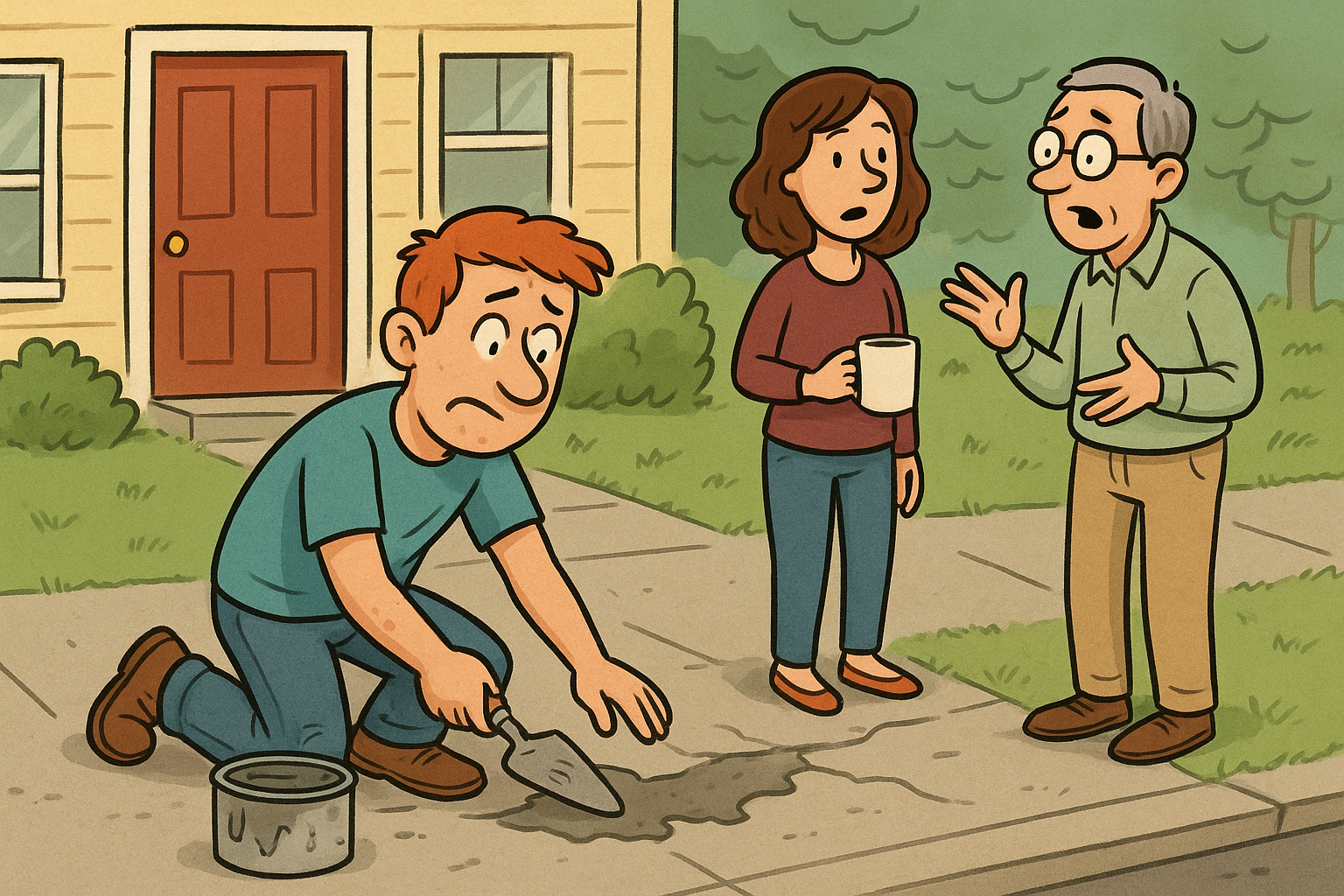
Saturday morning started simple enough. I decided to do a little patchwork in the driveway. Never done it before, but hey, I watched a 3-minute YouTube video. I mean, how hard could it be? Spoiler alert: very. I’m convinced YouTube needs a new disclaimer — “If you’re not a professional, double the time, triple the effort, and prepare to question your life choices halfway through.”


Once I finished (and was absolutely sure I hadn’t worked hard enough to count as “overdoing it”), I made the mistake of spotting the can of paint. You know, the one that’s been staring at me for three months, whispering, “You’ll get to me eventually.” So, I did what any reasonable person would do — I popped that lid open and decided to paint the front door trim before winter.


Now, I’ve painted enough in my life to know that the second you open a paint can, it acts like a people magnet. Suddenly, the neighborhood remembers I exist. Sure enough, as soon as I dipped the brush, someone wandered over for the longest conversation ever. Bless Sheila — my hero — who swooped in like a superhero with a distraction so I could actually finish the job.


It’s funny, when you’ve got nothing to do, nobody calls, nobody visits. But the minute you try to do something that requires focus, suddenly you’re more popular than the latest Reese’s Cup creation.


After I wrapped up, cleaned my mess (and parts of myself), Sheila and I went to dinner with some amazing friends — another brain injury survivor and his wife. Four of us total: two survivors and two caregivers. A perfect balance of chaos and compassion.


We laughed, ate great food, and for a few hours, I completely forgot about my scraped knees and the surprise streak of paint on my hand that made it look like I’d attempted a sad DIY manicure. Note to self: I’m never painting my fingernails again. I don’t care what trend men are following these days — this guy is officially sitting that one out.


All in all, it was the perfect ending to a day that started with good intentions and ended with good friends. We all agreed we should do it more often. And I, for one, can’t wait — preferably after my knees stop reminding me of that “easy” driveway project.
 

Mission Accomplished

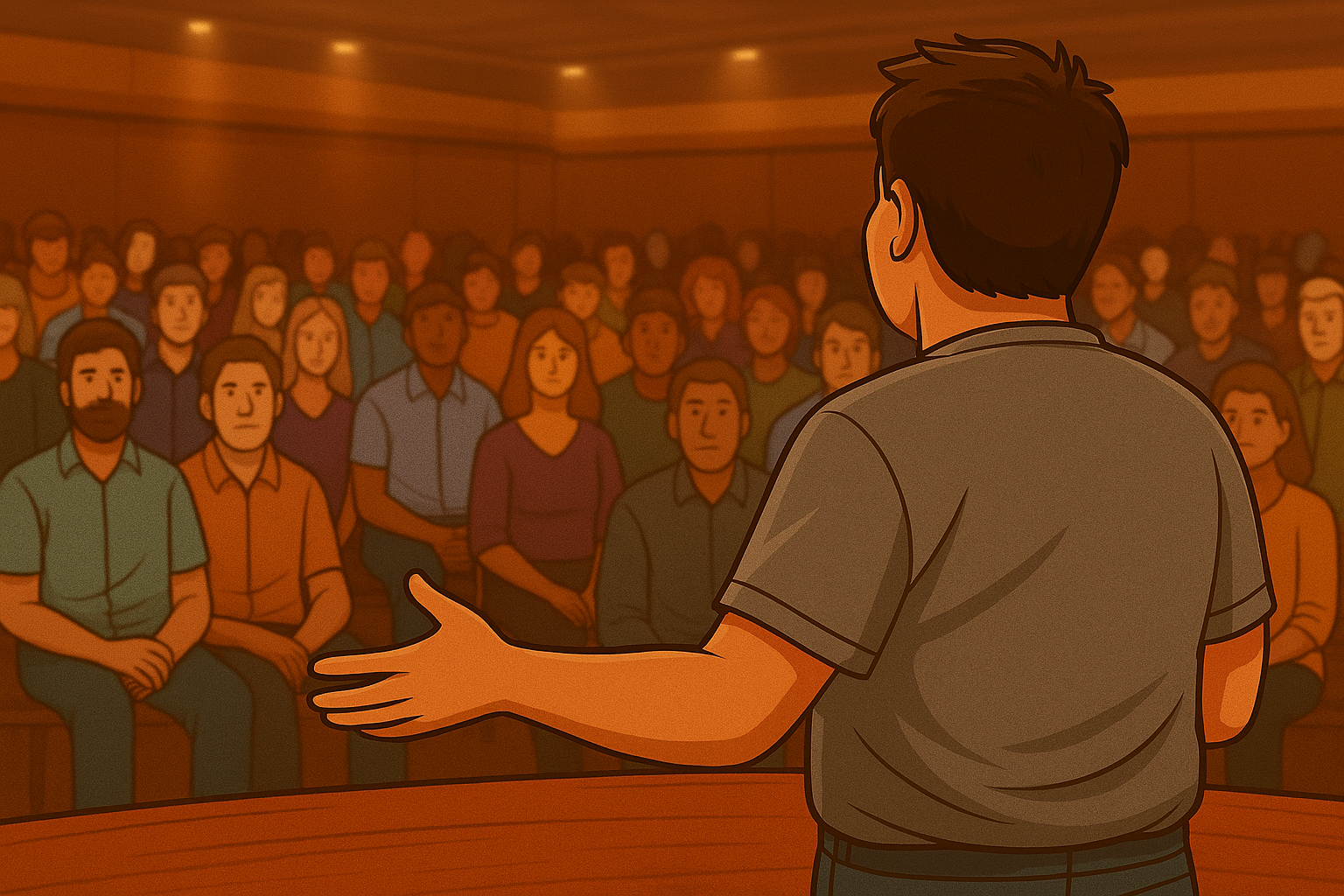
This afternoon, I was invited to share my story at a local church. Every month, they welcome someone new to come and speak. And if you know me at all, you know I never turn down an opportunity to share my story and spread awareness about brain injury.


When I arrived, I’ll admit—I was a bit overwhelmed. The church was massive, and it looked like there were at least twenty different ways to enter. A few doors were marked “Not an Entrance,” which thankfully narrowed down my odds of getting it wrong. After circling the building a second time (maybe even a third, if I’m being honest), I decided to just go in through the main entrance. Surely someone inside could point me in the right direction.

Just as I parked, a text came through from the man organizing the event:


“When you get here, come in through entrance 7 in the back.”

I quickly replied that I had arrived and would be there momentarily. His next message made me laugh:

“Ok great, I thought I saw you circling the building.”


It’s comforting to know that even people who don’t know me yet already have my back—or maybe he just had a good sense that a guy with a brain injury might get a little turned around. Either way, it worked out.


When I speak, I often wonder—are they really listening? Do my words make sense? Do they connect?
Today, I didn’t have to wonder. I could see it in their faces. They weren’t just hearing me; they were listening. They laughed at my corny jokes, nodded at the familiar struggles, and I even noticed a few misty eyes as I spoke about how God continues to use my journey to spread hope and kindness—to shine light on what’s often invisible.


They got it. They really got it.


After the talk, several people came up to thank me, sharing how my message touched them. Some spoke about loved ones living with Alzheimer’s or dementia—how my story helped them understand what their family members were going through. A few even bought my book. But for me, it’s never about the sale. It’s about connection. It’s about reminding people that everyone carries a story, and not all wounds can be seen.


There’s a saying I hold close to my heart:


“Everyone you meet is fighting a battle you know nothing about.”

That’s what I want people to remember—to treat one another with love, patience, and kindness. To never assume. To always care.

As I drove home tonight, reflecting on the day, two simple words came to mind:

Mission accomplished.

The unexpected gift in life’s imperfections

Where do you find your motivation?


Some days, I sit and stare at a blank screen, willing inspiration to appear. I search for something that hasn’t been said—a truth that can bridge the gap between my friends who live with brain injuries and those who have never known what it feels like to walk a mile in shoes like mine.

Not everything I write shines. My digital trash bin overflows with half-formed thoughts and abandoned ideas. But isn’t life a lot like that? Not every day is golden. Some days, we just sit quietly, waiting for the next shoe to drop.


One thing my brain injury has taught me is that it’s okay when life doesn’t go according to plan. In fact, some of my greatest blessings have been born from moments I once thought were mistakes. When the dust settles and I look around, what remains is always what matters most—substance, meaning, connection.

Maybe I had planned to spend the afternoon pulling weeds or trimming shrubs. But then, a neighbor stops by unexpectedly. Hours later, we’ve shared laughter, memories, and maybe a few tears. Those weeds will still be there tomorrow—but that conversation, that connection, might never come again.


We live as though tomorrow is promised, but it isn’t. I’ve sat beside loved ones in their final moments, and not once did I hear them say, “I wish I had worked harder,” or “I wish I had worried more.”
Every time, their regrets are softer, more human: “I wish I had more time. I wish I had said ‘I love you’ more.”

The truth is, now is all we ever really have—and we so often overlook it. Our motivation shouldn’t come from what’s unfinished, but from the simple miracle of being here at all.


When my time comes, I don’t want to leave with regrets. I won’t wish I had pulled more weeds. I’ll be grateful for the laughter shared, the hands I held, the stories told. I want to leave knowing I made a difference—that people saw in me a heart that was always bigger than my head, and a soul that found purpose in lifting others up so they, too, could shine.


That, to me, is motivation. Not perfection. Not productivity. But the quiet, beautiful reminder that every imperfect moment still holds something sacred—if only we take the time to see it.

Harvest Homecoming, Sweet Treats and Bittersweet Truths

Ah, Harvest Homecoming. That magical time of year when our little town transforms into a bustling maze of booths, crafts, and snacks that cost more than your first car payment. You’ll find everything from hand-carved wooden spoons to white-chocolate-dipped Oreos that are either gourmet or just confused. I haven’t figured it out yet.


But for me, the real tradition—the one I look forward to every year—is stopping by the local Boy Scouts booth and grabbing a pumpkin roll. Not just because it supports a good cause, but because it supports my well-maintained figure. And by “well-maintained,” I mean “held together by frosting and denial.” But I digress.

No trip to Harvest Homecoming would be complete without a few buckeyes. Or 326. I lose count somewhere between “this is my last one” and “do you think they sell these by the bucket?”


This year, though, things felt different.

There was a heaviness in the air—not from the sugar, but from something deeper. Last year, there was a shooting. A young man lost his life. I knew about it when it happened, but because of my brain injury, I had forgotten. That’s the thing about memory loss—it doesn’t just erase facts, it erases feelings. And when they come back, they hit harder.


He was someone’s son. Someone’s friend. Someone who probably had his own Harvest Homecoming traditions. Maybe he loved buckeyes too. Maybe he was just trying to enjoy the day like the rest of us.

And then, in a moment, everything changed.

I often think about the ripple effect of senseless violence. How one act can fracture dozens of lives. Families, friends, communities—all left asking the same question: Why?

I wish I had the answer. I wish any of us did.


But here’s what I do know: we can’t control the chaos, but we can choose how we respond to it. We can show up. We can remember. We can honor. We can keep traditions alive—not just for ourselves, but for those who no longer can.

So this year, as I wandered through the booths with pumpkin roll in hand and buckeye crumbs on my shirt, I carried a little extra weight. Not just from the snacks, but from the reminder that life is fragile. That joy and grief often walk hand in hand. And that even in the midst of tragedy, there’s still room for community, compassion, and a little powdered sugar.

We’re all rewiring. We’re all remembering. We’re all trying to make sense of the senseless. And maybe, just maybe, that’s what homecoming is really about.

Weekend Warrior: The Sacred Balance of Giving and Rest

Weekend Warrior: The Sacred Balance of Giving and Rest

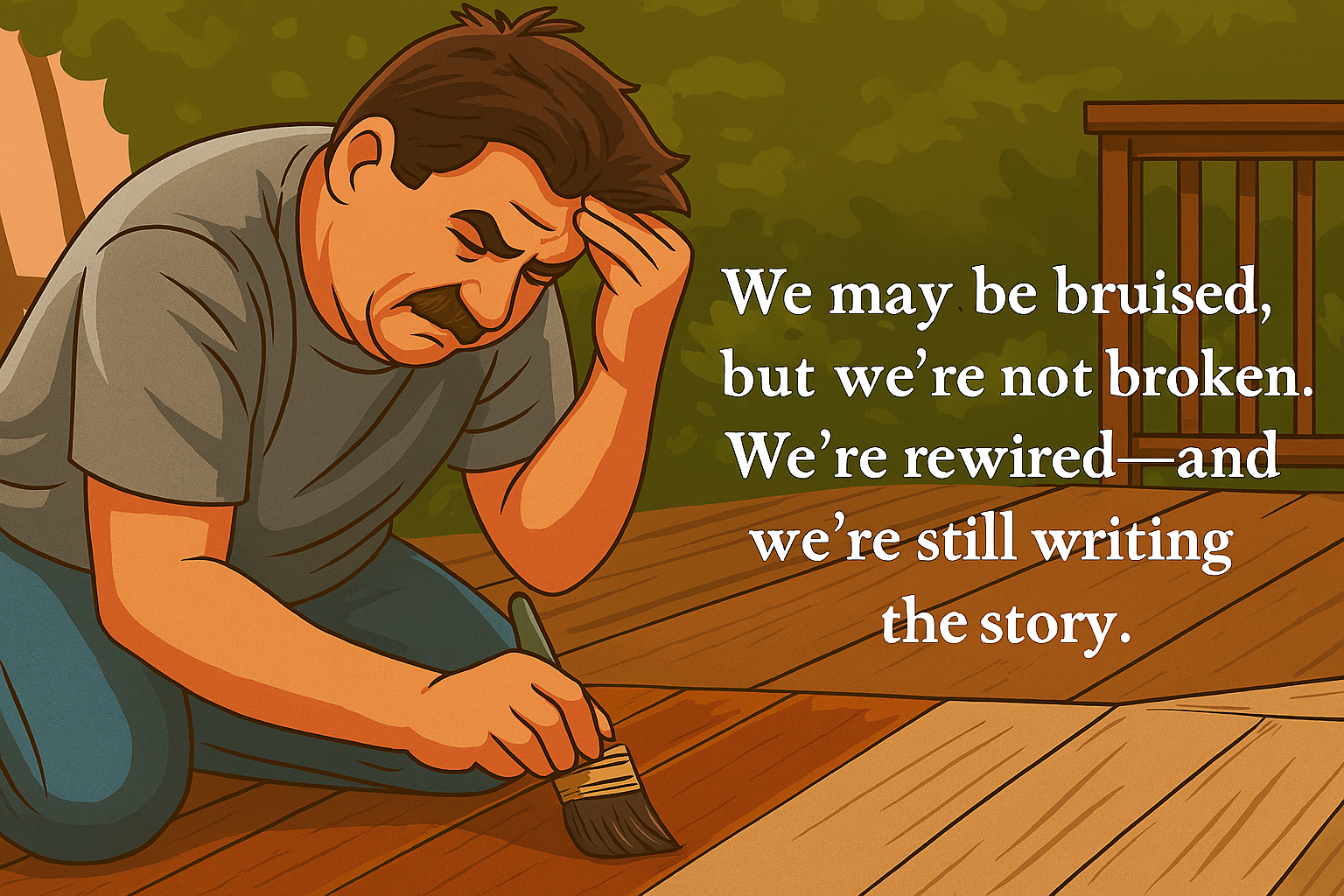
This weekend, I traded my microphone for a paintbrush and my podcast chair for a deck ramp. My wife Sheila and I headed to her mother’s house to stain the deck before winter crept in. Her mom wanted to lay down anti-slip pads on the ramp to make it safer in rain and snow, and we were there to help prep the space.

We started early Saturday, but the sun had other plans—it beamed down on the exact spot I chose to stain, turning our good intentions into a four-hour sweat session.


By the time we got home, our backs were aching, and our bodies were begging for mercy. I may have done more complaining than Sheila (okay, definitely more), but after a short rest, I decided to cut the grass too. The sun was setting, the breeze was gentle, and something in me said, “Keep going.”

Sunday morning, I told Sheila to stay home and rest. I went back to her mom’s house and finished the staining job. Meanwhile, her mom laid down the anti-slip pads herself—determined, resourceful, and full of grit. And now? Her ramp is safe. Her path is secure. And my heart is full.


Did I overdo it? Absolutely.

Was it worth it? Without question.


Rest is vital—especially for those of us living with brain injuries. But so is purpose. So is love. So is showing up for the people who’ve shown up for us.


There will be days when I need to rest and take care of Rob. But there are only so many days I’ll get to take care of others. That’s the sacred balance. It’s not easy. It’s not perfect. And it’s definitely not for the faint of heart.

I’ll admit—I struggle to let others care for me. I’m stubborn. I push through. I wear my hard-headedness like a badge, even when it weighs me down. But I’m learning. I’m growing. I’m a work in progress.


And aren’t we all?


So, here’s to the weekend warriors. The caregivers. The survivors. The ones who give even when they’re tired, and rest when they finally remember they deserve it. We may be bruised, but we’re not broken. We’re rewired—and we’re still writing the story.

One size doesn’t fit all, What health plans and Brain Injuries have in common


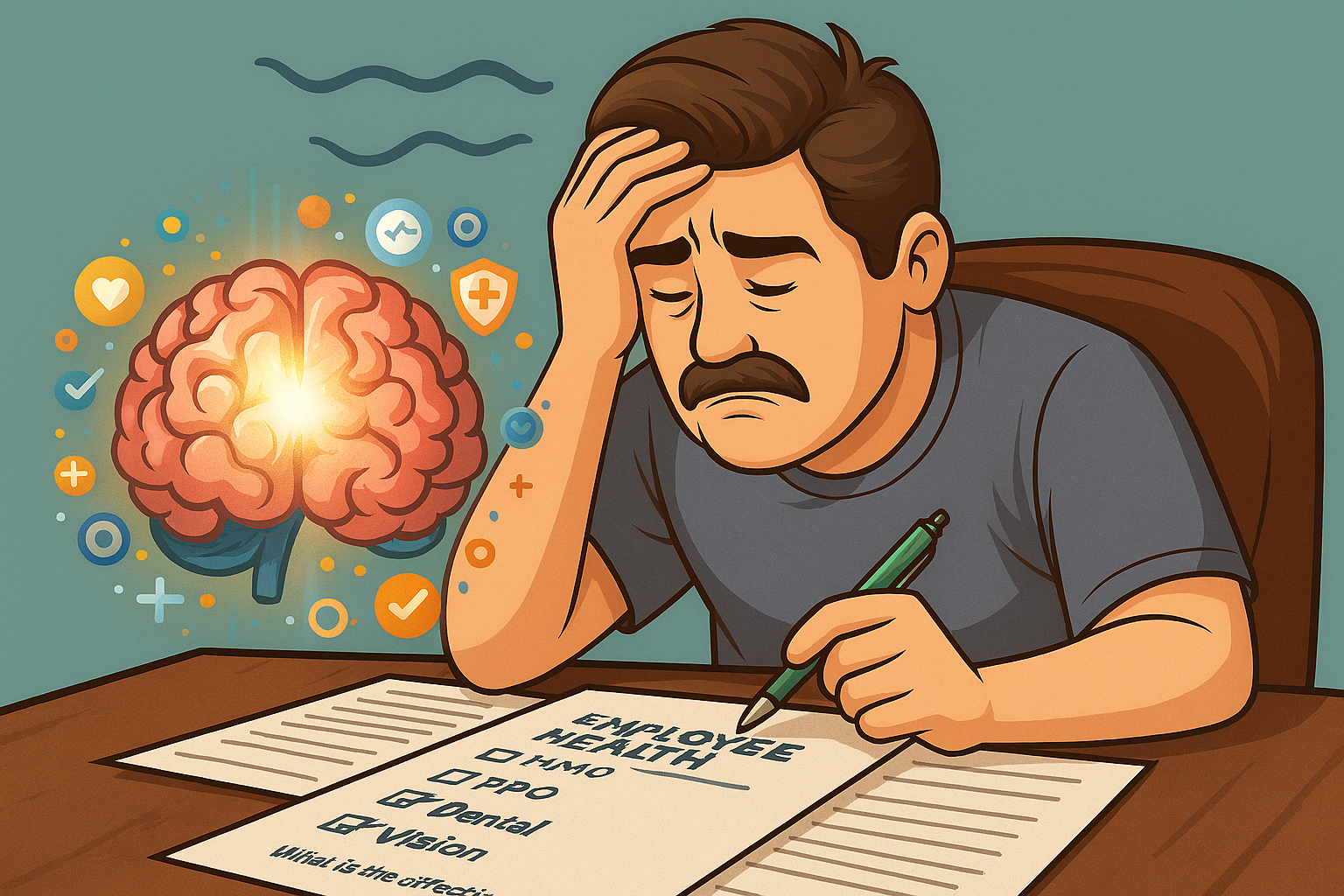
It’s that time of year again—the season of open enrollment.
A time when we sift through health plans, weigh our options, and try to predict the unpredictable. Sometimes it feels like you need both a college degree and a crystal ball just to make sense of it all.

Most of us end up choosing something similar to what we’ve always had—something familiar, something that worked before. But as I scrolled through the endless list of plans and providers, I couldn’t help but notice how much this process mirrors the journey of living with a brain injury.

Like open enrollment, a brain injury can feel overwhelming.
You’re suddenly faced with choices and decisions that used to be simple, now layered with complexity and uncertainty. Each step requires extra effort—more patience, more clarification, and more support.

From the outside, open enrollment seems easy enough. A few clicks, a few boxes checked, and you’re done. But those who’ve gone through it know the truth—it’s draining, confusing, and mentally taxing.
A brain injury is much the same way. From the outside, we might look fine. But inside, we’re navigating layers of invisible work—processing, adjusting, and striving to make sense of a world that no longer feels intuitive.

Just as employees turn to HR reps or online comparison tools for guidance, survivors too rely on support systems—caregivers, therapists, friends, and communities who help us piece together what once came naturally. Healing, like enrollment, isn’t something you do alone.

And the impact? It lasts far beyond a single decision.
The health plan you choose today shapes your care, your finances, and your peace of mind for the year ahead. In the same way, the daily choices a survivor makes—how to rest, how to cope, who to trust, what boundaries to set—quietly shape the course of recovery.

Neither process is one-size-fits-all.
There’s no perfect plan and no universal path to healing. What works beautifully for one person might not work at all for another. Both require patience, personalization, and the courage to keep trying until something fits.

So, as we enter this season of decisions, may we remember that—whether we’re choosing a health plan or choosing hope—every step toward understanding ourselves better is a step toward healing.

The Quiet Power Of Gratitude

Gratitude

Gratitude has a way of reshaping the way we see the world.

Most of us are blessed beyond measure, though we rarely stop long enough to truly feel it. We have food on our tables, a place to rest our heads, and people who love us. Some live in abundance, others in simplicity—but all of us have something to be thankful for. The real question is: how often do we pause to notice?

Each day, I try to find at least one thing that fills me with gratitude. Some days, it’s as big as the freedom I enjoy as an American—the ability to speak my mind, to dream, to pursue what I love. Other days, it’s as small and simple as a warm cup of coffee that brews in under two minutes. Gratitude doesn’t ask for grandeur; it only asks for awareness.

When I first began reflecting on gratitude after my brain injury, I struggled to find reasons to be thankful. But the deeper I looked, the more blessings I uncovered. Before my injury, I had only a handful of close friends. Now, I have a community so rich and full that my greatest challenge is finding time to see everyone. That is a gift I do not take lightly.

My brain injury also gave me something unexpected—a new way of seeing the world. Where others get tangled in the complexity of a problem, I often see a simple, elegant solution hiding in plain sight. It’s as if life slowed down just enough for me to notice what others miss. In a world addicted to overthinking, that feels like a quiet superpower.

And then there’s the gift I never expected to be grateful for: I don’t always catch sarcasm anymore. Once upon a time, I took everything to heart—every offhand remark, every joke at my expense. Now, the sharp edges of words often pass right over me, leaving me with peace instead of pain. What once might have wounded me now simply floats away.

Don’t mistake me—there is nothing glamorous about a brain injury. It comes with daily struggles, moments of deep frustration, and endless lessons in patience and humility. But even in the midst of the hard days, gratitude shines through. Because when I take the time to truly see what I have—to count what’s right instead of what’s wrong—I realize I have far more blessings than burdens.

Happiness, after all, isn’t found in the absence of struggle. It’s found in the quiet decision to be thankful anyway.

And that, perhaps, is the most powerful healing of all.

Seasons of healing and finding beauty in every chapter of change

The Seasons of Healing: Finding Beauty in Every Chapter of Change

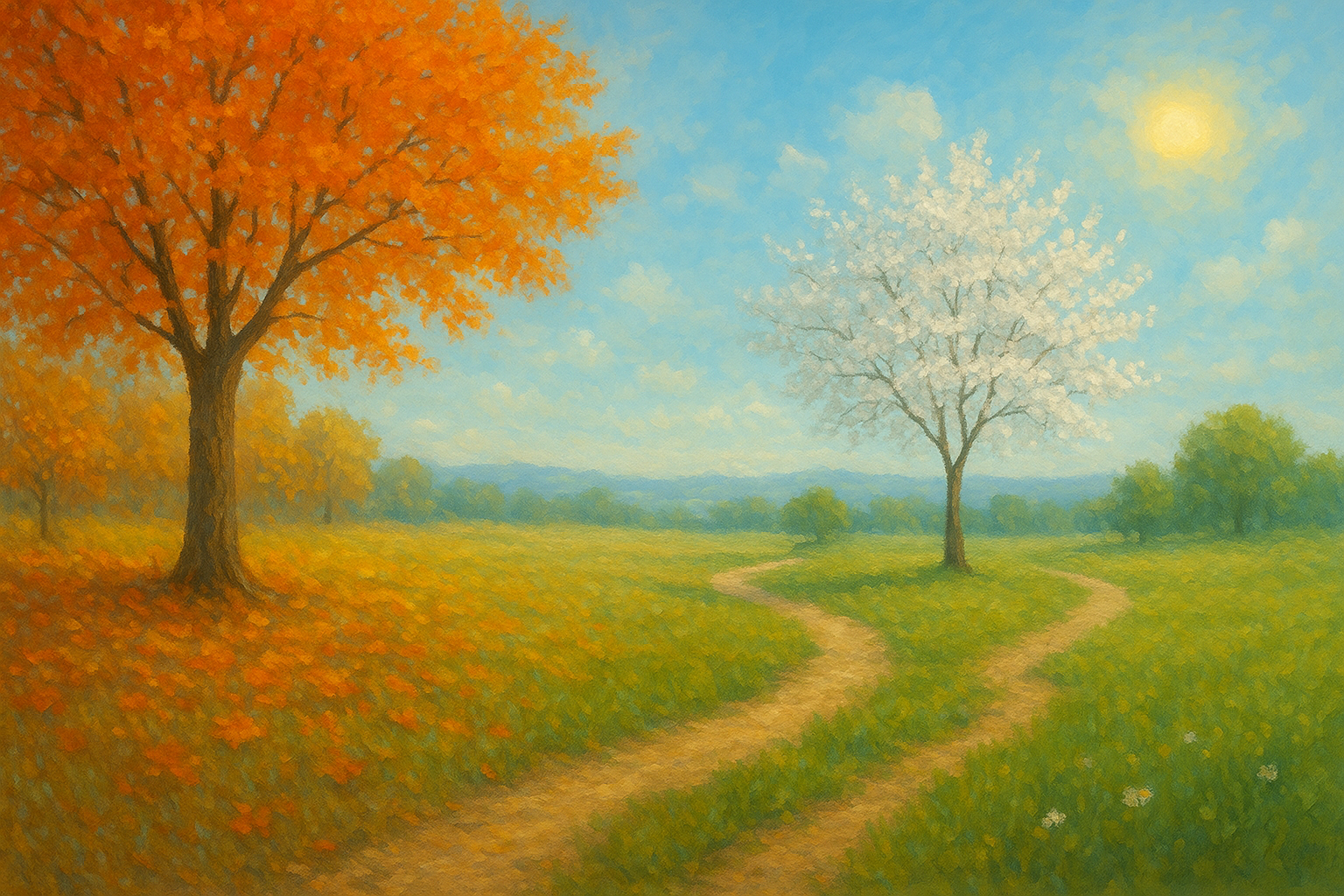
Seasons have a way of reminding us that change is not just inevitable — it’s essential.
Each one arrives with its own rhythm, its own lessons, and its own quiet invitation to grow.


As we recently welcomed fall and bid farewell to summer, many of us breathed a sigh of relief. This past summer’s heat was relentless — the kind that drives you indoors and tests your patience with even the simplest outdoor joys. Some people flourish in that kind of intensity; I’m not one of them. I welcomed autumn with open arms, ready for the crisp air, the golden leaves, and maybe a pumpkin spice latte or two. But I also know how quickly it will pass. Winter is never far behind — waiting quietly, just beyond the glow of the holidays and the whispers of “Black Friday savings.”


Lately, I’ve been reflecting on how life after a brain injury feels a lot like the turning of the seasons. Each stage carries its own weather, its own beauty, and its own kind of pain.


The injury itself — that first impact — is winter.
It’s cold and isolating. Everything familiar feels buried beneath layers of confusion, exhaustion, and loss. You cling to whatever warmth you can find, fighting simply to survive. Every small victory feels monumental because, in the midst of the storm, survival is monumental.

But slowly— winter softens. The ice begins to melt.

And spring arrives.


Spring is fragile but full of promise. You start to relearn, to rediscover, to rebuild. The tiniest signs of progress become symbols of hope. You may still tread carefully, but the world begins to look a little brighter again.

Then comes summer — the season of strength.
You find your rhythm. You begin to trust yourself again. You make new connections, explore new possibilities, and uncover parts of yourself you never knew existed. Joy returns. Confidence blooms. You start to feel alive again.


And finally, autumn.
The season of reflection.
You look back — not with regret, but with gratitude. You see the distance you’ve traveled, the storms you’ve survived, and the growth that’s taken root in your soul. You begin to share your story, helping others prepare for their own winters.


Because that’s what healing truly is — a cycle of endings and beginnings, losses and renewals.

What’s in it for them?


What’s In It for Them?


Today, I was asked a question that stopped me in my tracks—a simple question, yet profoundly revealing:


“What do they get out of it?”


If you’ve followed me for any amount of time, you know that my heart beats for one mission: spreading awareness about brain injuries. It’s my purpose, my passion, and the story I carry with me every day. Yet, one of the greatest challenges I face is simply getting the opportunity—convincing people to open the door and let me share that story.


When that question was asked—what do they get out of it?—it made me pause. I’ve always focused on the value of the message itself: education, awareness, and the inspiring story of transforming pain into purpose. But I had never really stopped to consider the deeper “why” for my audience.


So… what is in it for them?


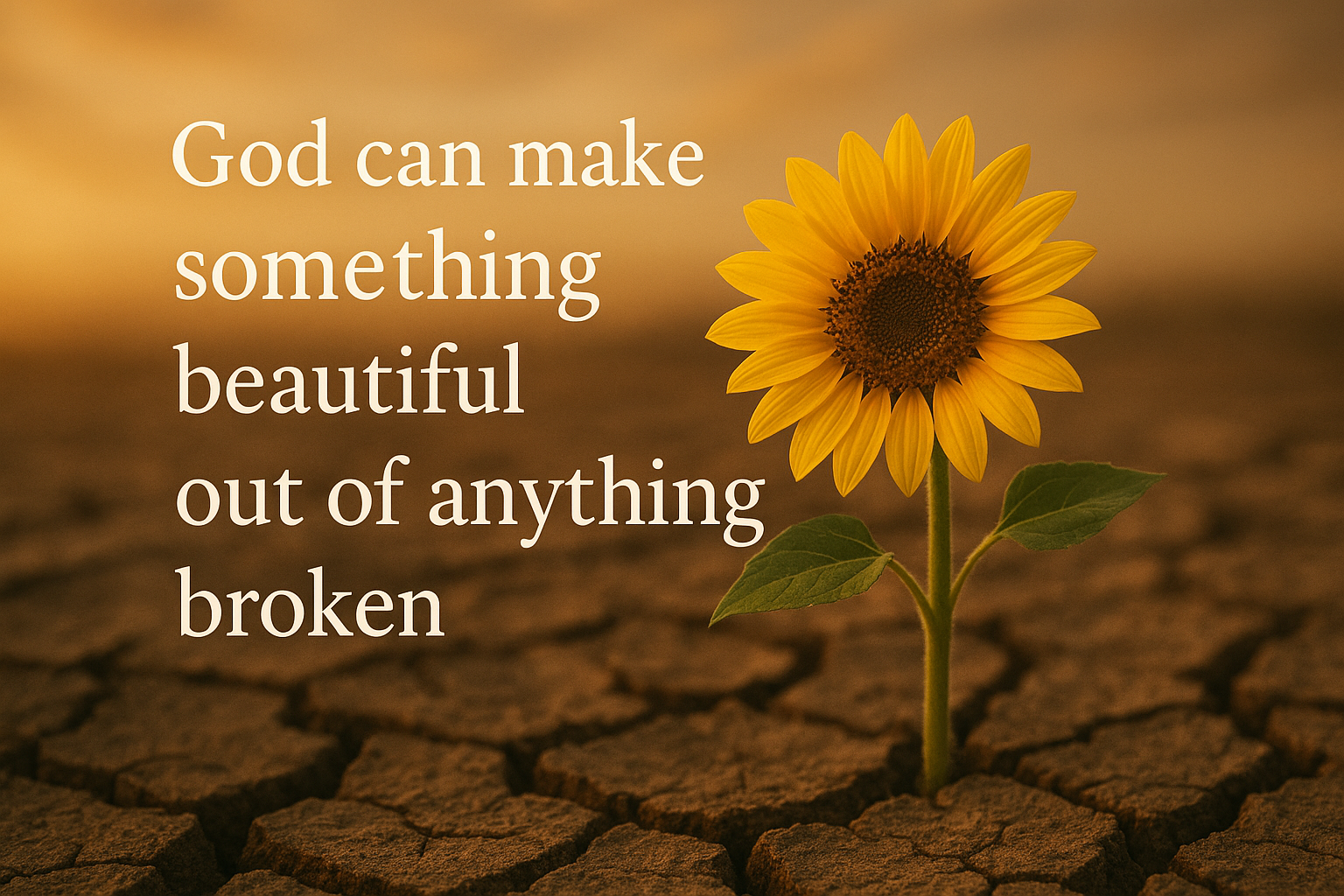
My story isn’t just about surviving a brain injury—it’s a testimony. It’s about how God took brokenness and built something beautiful from it: a podcast that gives voice to the voiceless, a book that brings hope to the hurting, a global network that connects survivors and caregivers who once felt alone.


It’s not just about awareness. It’s about awakening.
It’s about grace.
It’s about resilience.
It’s about divine purpose.


Because this message—though rooted in brain injury—is really about the human experience. Every one of us knows what it’s like to feel unseen, misunderstood, or forgotten. We’ve all faced moments where we needed compassion more than correction, understanding more than answers.


My story reminds people that they’re not alone. That community still exists. That even in the darkest places, connection can be the light that leads us forward.


At its core, my message is about hope—hope that healing is possible, that purpose can grow out of pain, and that no matter what we’re going through, someone does understand. Someone has been there. Someone is ready to celebrate your victories and stand beside you through your struggles.


That’s what’s in it for them.
That’s what’s in it for all of us.

Off the Grid: A Lesson in Love, Aging, and Brain Injury

This afternoon, I got a call from my aunt. She was trying to reach my dad, but he wasn’t answering—and that was unusual. My dad always picks up on the first ring. His phone is practically an extension of his hand. After work, my brother and I drove to his house. No car in the

driveway. No sign of him. We checked the usual places—his home, the bowling alley—but he was nowhere to be found. That quiet panic started to build. Was he okay? Had something happened? Was he in a ditch somewhere, hurt and alone?

We searched every alley in the area until finally, sitting in the parking lot of one last bowling alley, I tried calling him one more time.

He answered. Turns out, he’d gone bowling and turned off his phone so he wouldn’t be disturbed. He was fine. But for those few hours, the uncertainty was overwhelming. When someone you love goes off the grid—especially as they get older—it can trigger a flood of emotions. Fear. Confusion. Helplessness.

And then it hit me: I do the same thing.

As a brain injury survivor, I’ve wandered off in stores without realizing how long I’ve been gone. I’ve taken longer than expected grabbing fast food, only to get a call from my wife asking where I am. She’s not checking up on me because she doesn’t trust me. She’s checking in because she loves me. Because she knows how easily I can get confused. Because she wants me safe. It’s easy to forget that our caregivers carry a quiet burden. They’re always watching, always worrying, always hoping we’ll stay within reach. And when we don’t, even for a short time, it can feel like the ground disappears beneath them.

This experience reminded me of something important: we owe it to the people who love us to keep them in the loop. If we change our routine, take a detour, or just need a moment alone, a quick message can go a long way. It’s not about control—it’s about compassion.

So here’s my promise: I’m going to make a conscious effort to stay connected. To let my loved ones know where I am. To remember that love often looks like a phone call, a check-in, a moment of concern. Because being off the grid might feel freeing—but being found is what keeps us safe.