Life Rewired Logo

Is it just me?

Maybe this is what getting older looks like—measuring today against memories from thirty years ago and wondering when the shift happened. Or maybe it’s just that life has slowed me down enough to notice things I once rushed past.


I don’t get out of the house very often anymore. Constant headaches, anxiety, and crowded places have a way of shrinking your world. So when I do step outside my carefully managed bubble, I tend to observe more than participate. Lately, what I’ve noticed hasn’t always been encouraging.


There seems to be a growing impatience in the air—especially among people my age and older. A sense of entitlement. A short fuse. Just today, my wife and I were walking to our car after leaving Target. A man parked next to us was backing out and had to wait—maybe three seconds—for us to clear the way. Three seconds was apparently too much. The frustration on his face bordered on a tantrum.


I turned to my wife and said something that surprised even me: Have you noticed that younger people seem to have more patience and respect than their elders? I’ve seen it in public places. I’ve seen it in the workplace. Not across the board, of course—but often enough to pause. In many cases, the younger generation appears to be working harder, listening more, and complaining less. That’s just my observation, not an accusation.


And then—because life has a way of balancing itself—we stopped at a local bakery. One of those unplanned stops for a donut we definitely didn’t need but somehow really needed. They were out of my favorite donut—the one with caramel and peanuts. My wife mentioned it casually to the woman behind the counter, who looked to be in her early sixties.

Without hesitation, she smiled and said, “We have plain donuts left. I’d be happy to make one for him.”

That had never been offered to us before.


Not only did she make it, she went the extra mile—extra caramel, extra peanuts. No fanfare. No expectation. Just kindness. I walked back to the car while my wife paid. When she joined me a moment later, she handed me an extra $1.50 and said, “She gave you a little discount. Said, ‘Here—you deserve it.’”


In a world where it’s easy to lose faith in people—where parking lots feel like battlegrounds and patience feels extinct—sometimes kindness still finds us. Quietly. Unexpectedly. In the form of a stranger who simply chooses to care.

So maybe it’s not all bad. Maybe humanity isn’t gone—it’s just hiding in small places. Behind bakery counters. In extra effort. In caramel and peanuts.


I hope that on your hardest days, when the world feels loud, rushed, and unkind, you encounter a stranger willing to go the extra mile for no reason at all.

And may your worst day still be filled with extra caramel frosting and extra peanuts.

My Brain Injuries Perspective.

Some days, the only thing separating me from the old version of myself is the constant weight of 24/7 headaches and the quiet gaps where memories should be. On the outside, I can look the same. On the inside, a “normal” day is often layered with anxiety, frustration, amplified emotions, and the feeling of being overwhelmed by things that once came effortlessly.


I’ve accepted that my life no longer resembles what it used to be. But acceptance doesn’t mean I live in the past. I don’t spend my days longing for who I was. Instead, I’ve come to see life through a different lens.


Everyone has a shelf life. None of us are getting out of this alive.


If we were given the privilege of seeing our life’s timeline laid out in front of us—if we knew exactly how many days we had left—I think something would shift. I believe we would stop obsessing over what we’ve lost, what we lack, or what didn’t turn out the way we planned. We would start focusing on something far more important: significance.


We would ask ourselves how to spend the days we have left in a way that matters. How to use whatever gifts, talents, and breath we still have to bring joy—not just to ourselves, but to the people placed around us. And maybe, if we lived that way, we wouldn’t need a timeline at all.


Because the truth is, we don’t know how many days are ahead of us. None of us do. So perhaps this is how we should be living anyway.


Take the extra five seconds to make a stranger smile. Pick up the phone and call someone who might just need to hear a familiar voice. Offer kindness without keeping score. Choose presence over perfection.

When the end eventually comes, I don’t think we’ll wish we had fewer headaches or more certainty. I think we’ll hope we spent what we were given—however imperfectly—on love, connection, and moments that made life feel meaningful.

And maybe that’s enough.

New Year and getting older

The holidays are finally behind us, and in theory, this is the moment when life returns to “normal.”
But I’m no longer convinced that normal is a real thing.


When I was a child, normal was simple. You went to school, rushed home to finish your homework, and then played until bedtime. If you’re anywhere near my age, you probably remember quietly staying up past that bedtime to catch Johnny Carson’s monologue—and if he had a good guest, you knew you were going to pay for it the next morning. That was normal. At least, that was my normal.


As we get older, though, our versions of normal evolve—and often unravel. What once felt predictable becomes complicated. These days, my normal looks more like controlled chaos. And I don’t say that negatively. I say it honestly.


Our days are filled with after-work responsibilities: allergy shots, doctor appointments, counseling sessions, and helping care for aging parents. If there’s any time or energy left after that, we use it to sit down for dinner, knock out a few chores, and then collapse into the evening, hoping tomorrow will be manageable.


The one constant that never seems to change is how fast time moves.
Before my brain injury, that used to bother me deeply. Aging bothered me. Not death itself—I’ve never been afraid of that—but the idea of simply getting old unsettled me.


I turned 50 last year, with another birthday right around the corner, and something surprising happened: aging no longer scares me. Living with chronic pain has a way of reshaping your perspective. It forces you to confront what truly matters and strips away fears that no longer deserve your energy.


If I’m being honest, I long for the day when I can finally be pain-free. But I have never given up hope—and I don’t plan to start now.

And neither should you.

The New Kitten

Earlier this year, we said goodbye to our oldest cat, Ginger. She was my constant companion—my quiet shadow, my comfort on the hard days. Animals have a remarkable way of knowing when your heart is heavy, and Ginger always seemed to sense it before I ever spoke a word. If you saw me, she was never far behind. Losing her felt like losing a piece of myself.


There’s a strange truth about grief: sometimes we mourn our pets in a way that feels even deeper than the grief we carry for people we love. Not because those relationships matter less—but because the love of an animal is so beautifully uncomplicated. It is pure, forgiving, and unwavering. You can step on a tail, lose a favorite toy, or come home late, and they still greet you like you’ve been gone for years. That kind of love leaves a quiet ache when it’s gone.


Our younger cat has felt the loss too. She still peers into the garage, as if Ginger might be waiting there and we simply forgot to look. Hope can linger in the smallest places. Ginger wasn’t just my buddy—she was hers as well.

Getting another cat wasn’t part of the plan. You don’t replace a soul like Ginger’s; that kind of love is singular. But Emma needed a friend, and maybe—someday—we’d open our hearts again.


That someday arrived sooner than expected.


Last month, while my wife Sheila was visiting her mom, a tiny kitten appeared to greet her as she stepped out of the car. He was impossibly small, his little nose a bit battered, but something about him felt like grace showing up unannounced. We talked it over, and as usual, my heart spoke louder than my logic. I’ve always had a soft spot for the underdog. Saying yes felt natural.

Now, a month later, that little soul has filled our home with a joy we didn’t realize we were missing. Thunder—our three-ish-month-old whirlwind—has officially become part of our family. He hasn’t replaced Ginger. He never could. But he has reminded us of something just as important: love doesn’t run out. It expands.


I still miss Ginger something awful. But in the quiet spaces where grief once echoed, Thunder is helping mend what was broken—one purr, one playful leap, one tiny heartbeat at a time.

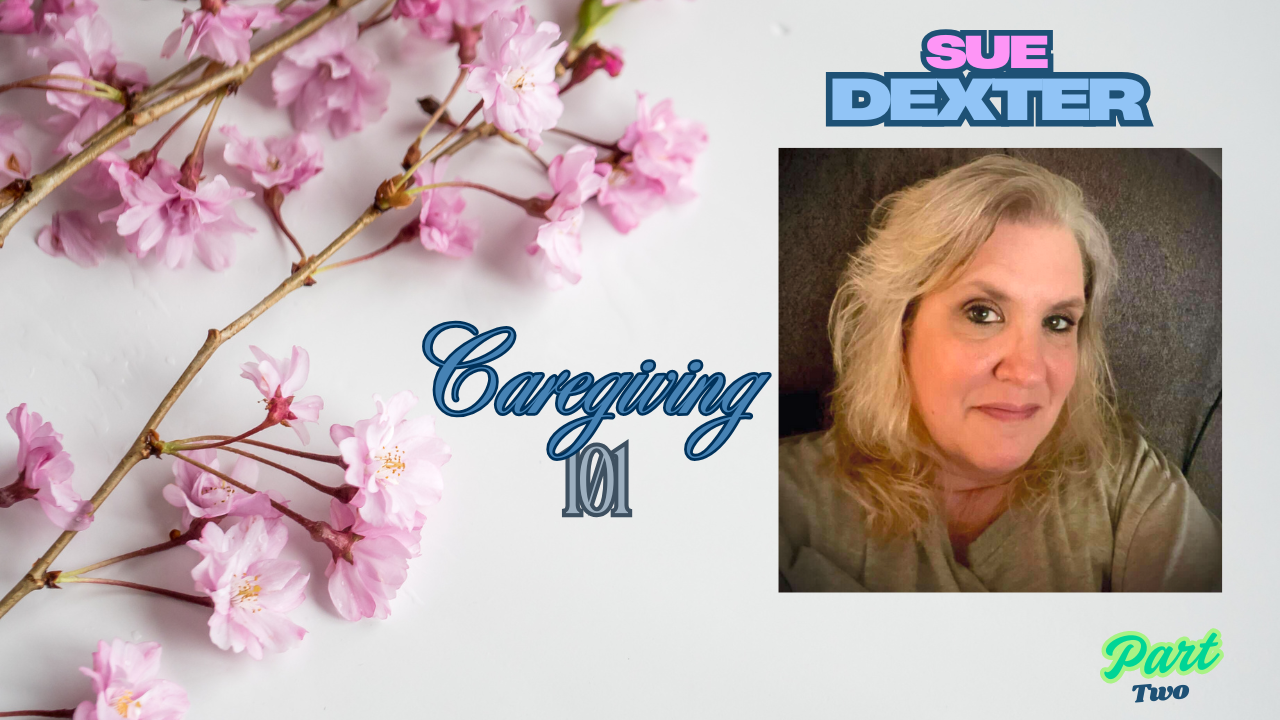
Caregiver 101 Part 2

In our 2nd and final episode with Sue Dexter we continue to learn how life is different now for her as a caregiver and how her husband who sustained a traumatic brain injury after a 60-foot fall is navigating in his unexpected brain injury life. Below is Sue's Bio and Link to her support group of over 5000 members. Sue Dexter, from West Springfield Massachusetts Administrative Assistant, Center for Human Development, Children's Behavioral Health Initiative Department Education: Associate Degree in Science, Developmental Disabilities Technology Outside of my professional life, I enjoy music, dance, musicals, and crafts. I am also the founder of the Facebook group "Understanding Traumatic Brain Injury (TBI)," which aims to raise awareness, educate, and provide support for TBI survivors, caregivers, and allows organizations offering relevant services information and guidance.

Coping skills part 2 with Tyler Mendoza
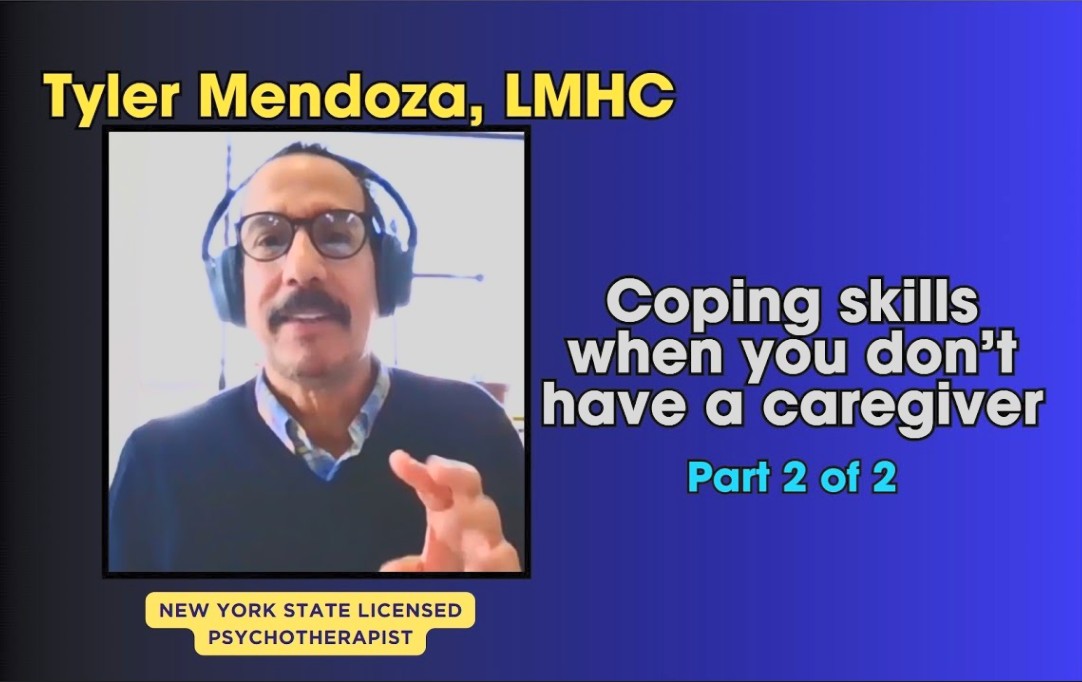
This episode we wrap up our conversation about navigating through a traumatic brain injury when you do not have a caregiver to help you cope and learn to live with a brain injury. Tyler Mendoza, LMHC, a New York State Licensed Psychotherapist talks with us today about things you can do that are helpful when you don't have a caregiver. Email: Tyler@premiercnp.com. office cell 646-425-1936. Website. https://premiercnp.com/

Coping Skills with Tyler Mendoza
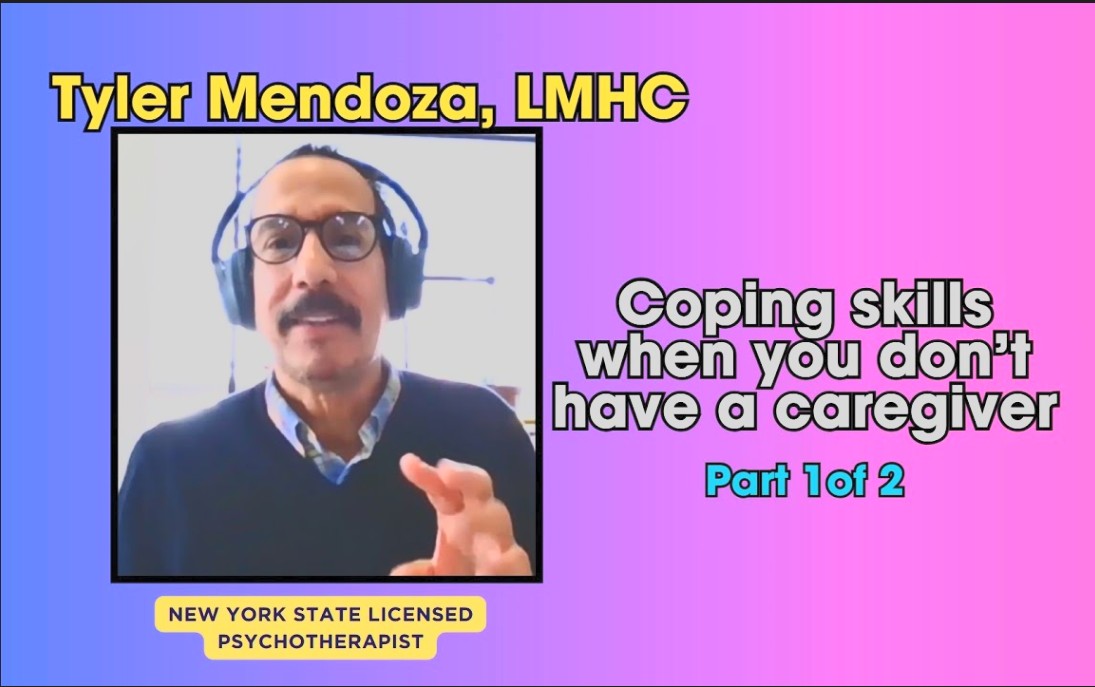
Navigating through a traumatic brain injury is difficult enough when you do have a caregiver to help you cope and learn to live with a brain injury. What do you do if you are going through this alone? Tyler Mendoza, LMHC, a New York State Licensed Psychotherapist talks with us today about things you can do that are helpful when you don't have a caregiver. Email: Tyler@premiercnp.com. office cell 646-425-1936. Website. https://premiercnp.com