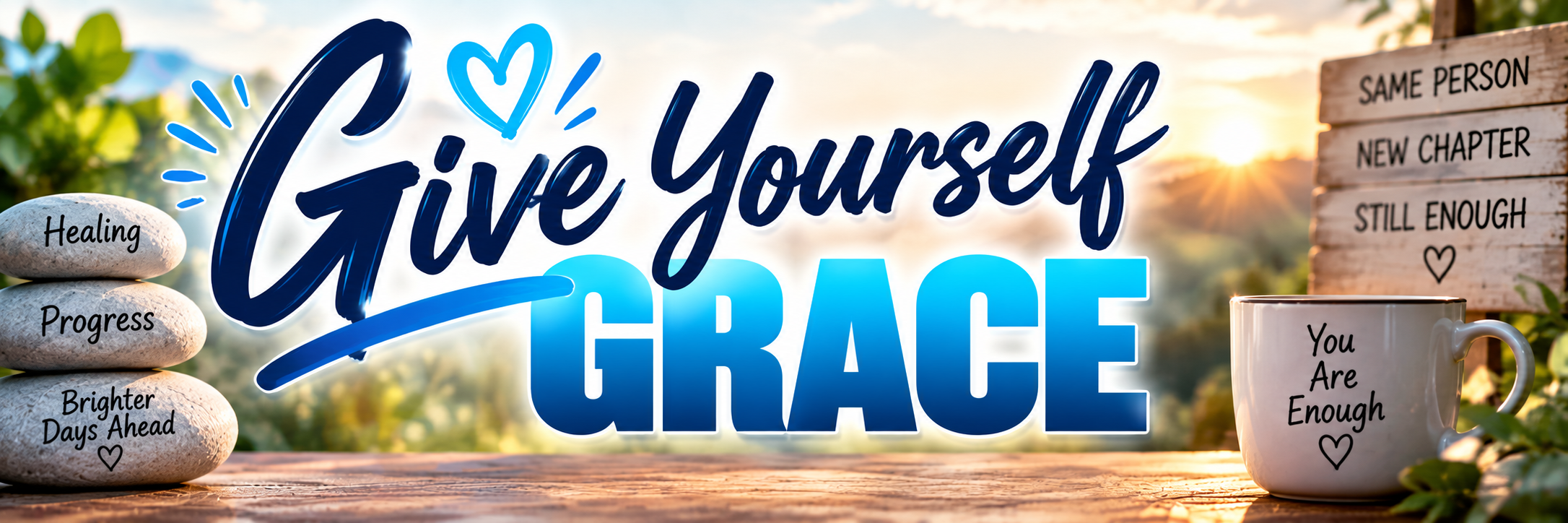
Recovery isn't a race.
There may be good days, difficult days, and days when you feel like you've taken a step backward. That doesn't erase the progress you've already made.
After a brain injury, it can be easy to compare yourself to the person you were before your injury. You may become frustrated when something that once seemed simple now takes more time, more effort, or more rest. Your life may look different than you expected it to. Different doesn't mean finished. Giving yourself grace means learning to work with the brain you have today instead of constantly being angry with yourself because it doesn't work exactly like it did before.
 What Does Giving Yourself Grace Look Like?
 Rest Without Feeling Guilty
Rest isn't laziness.
Your brain may need breaks long before the people around you do. Learning to recognize when you've had enough—and allowing yourself to stop—is part of taking care of yourself.
Sometimes rest is part of the work.
 Slow Down
You don't have to keep the same pace you did before your injury.
Take your time. Do one thing at a time. Break larger tasks into smaller pieces.
Slower is still moving forward.
 Use the Tools That Help You
Use reminders. Make lists. Set alarms. Write things down. Ask someone to repeat something.
Needing a tool doesn't mean you've failed.
The goal isn't to prove you don't need help. The goal is to make life work for you.
 Expect Good Days and Hard Days
Recovery isn't a straight line.
You may have a great day followed by a difficult one. Symptoms may change with fatigue, stress, overstimulation, or simply from one day to another.
A difficult day doesn't mean you're back at the beginning.
 Stop Comparing Yourself
Try not to compare yourself to another survivor—or even to the person you were before your injury.
Every brain injury is different, and every recovery moves at its own pace.
Your journey doesn't have to look like anyone else's.
 Change How You Talk to Yourself
Instead of:
“Why can't I do this anymore?”
Try:
“This is harder for me now. What could make it easier?”
That small change can turn frustration into problem-solving.
 Accept Help
Let someone carry the groceries. Ask for a ride. Bring someone to an appointment. Ask for instructions to be written down.
Accepting help doesn't take away your independence.
Sometimes accepting help is how we protect the independence we still have.
 Notice the Small Wins
Progress isn't always something huge.
Remembering an appointment. Making dinner. Going to the store. Getting through a difficult day. Recognizing when you need a break.
Those things count.
Don't become so focused on how far you still want to go that you forget how far you've already come.
 Be Kind to Yourself
You are learning how to navigate a life that may work differently now.
Some days you'll handle it beautifully. Other days you won't.
Give yourself the same patience, kindness, and understanding you would give another survivor who was struggling.
Because sometimes the person who needs your compassion the most... is you.
 One Day at a Time
You don't have to figure out your entire future today.
Focus on what your brain and body need right now.
Rest when you need to rest. Celebrate progress when it comes. Ask for help when you need it. And on the difficult days, remember:
Different doesn't mean finished.
There can still be brighter days ahead.